Loading
Preparing your Himalayan journey
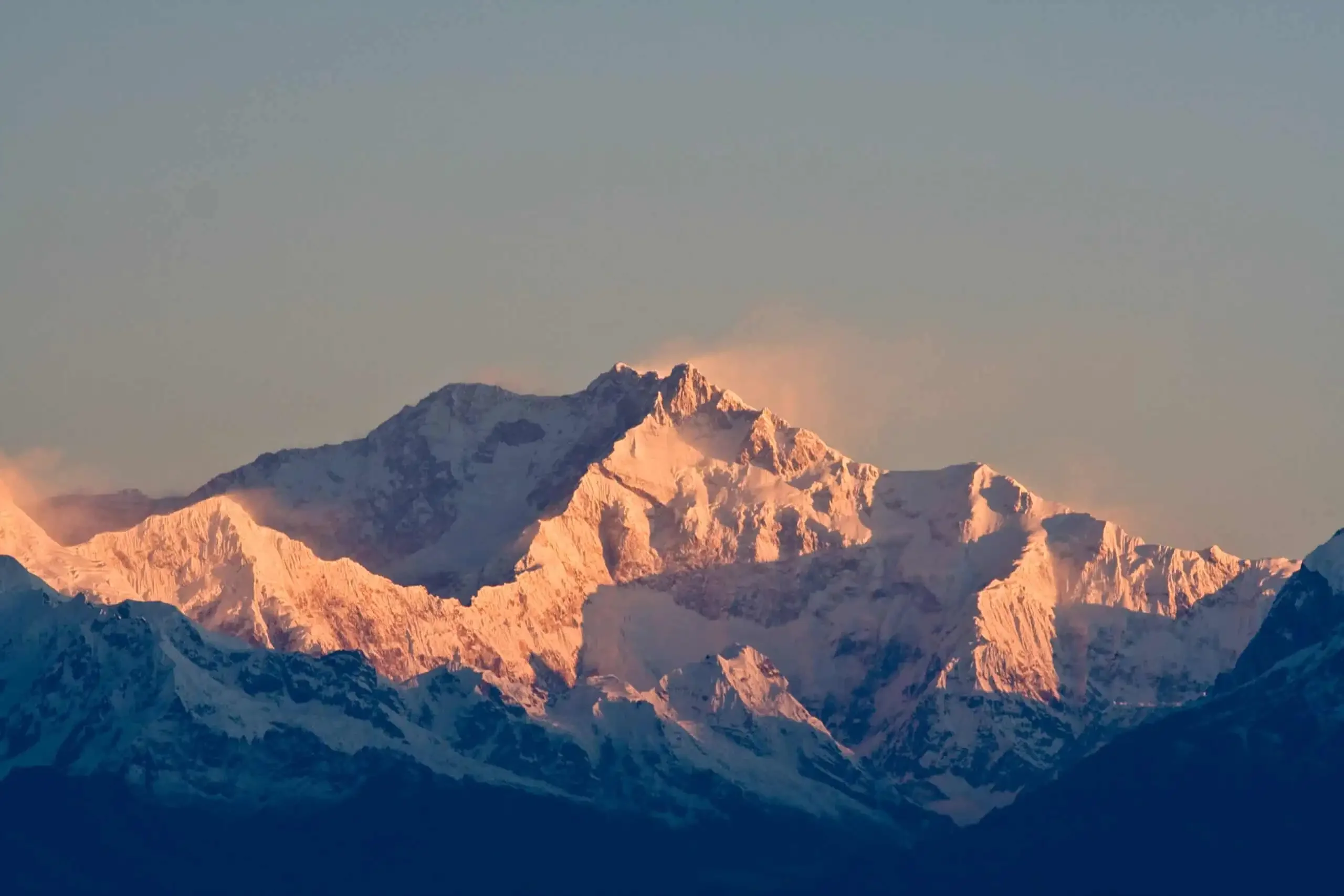
Kanchanjunga Expedition
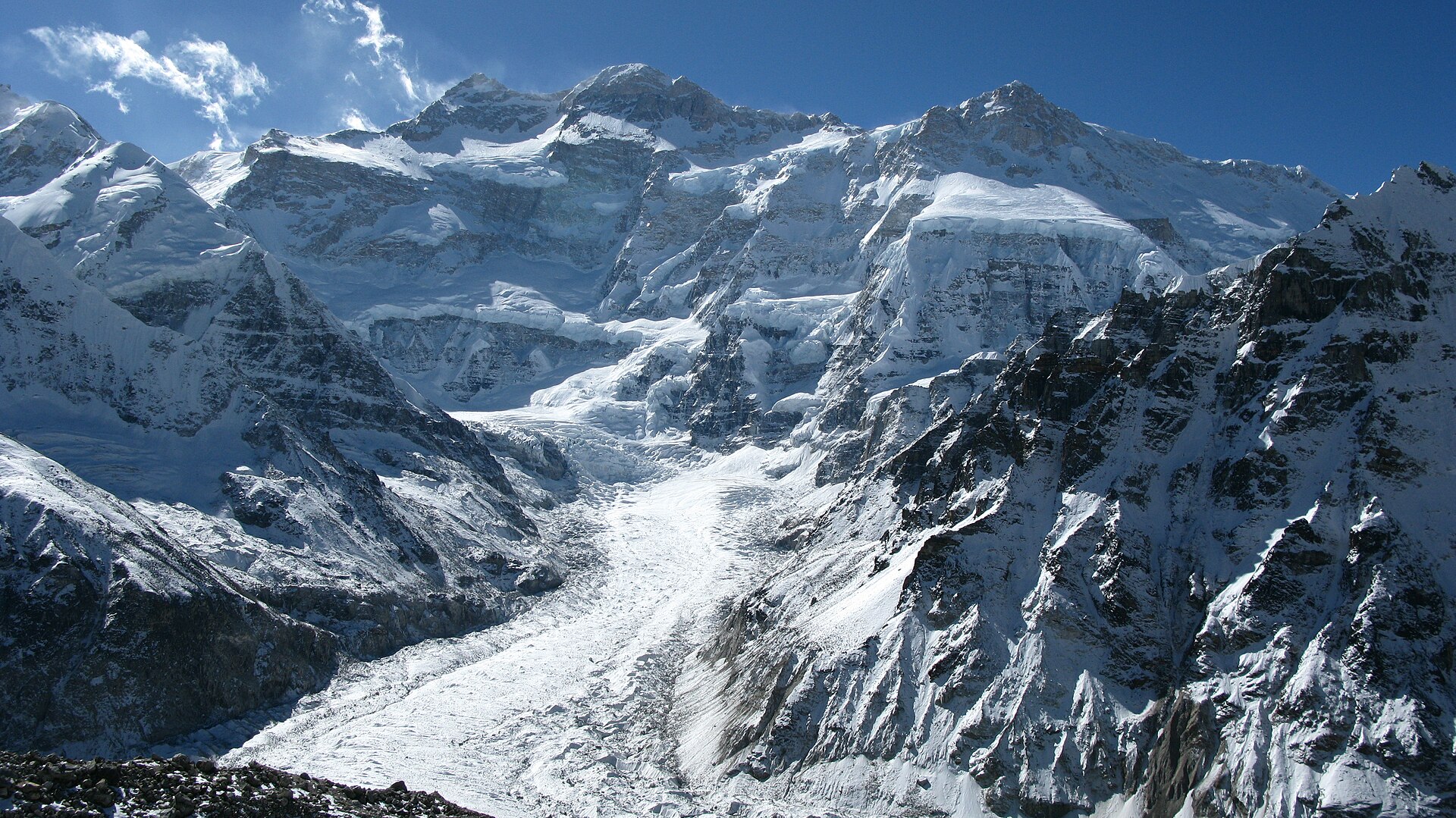
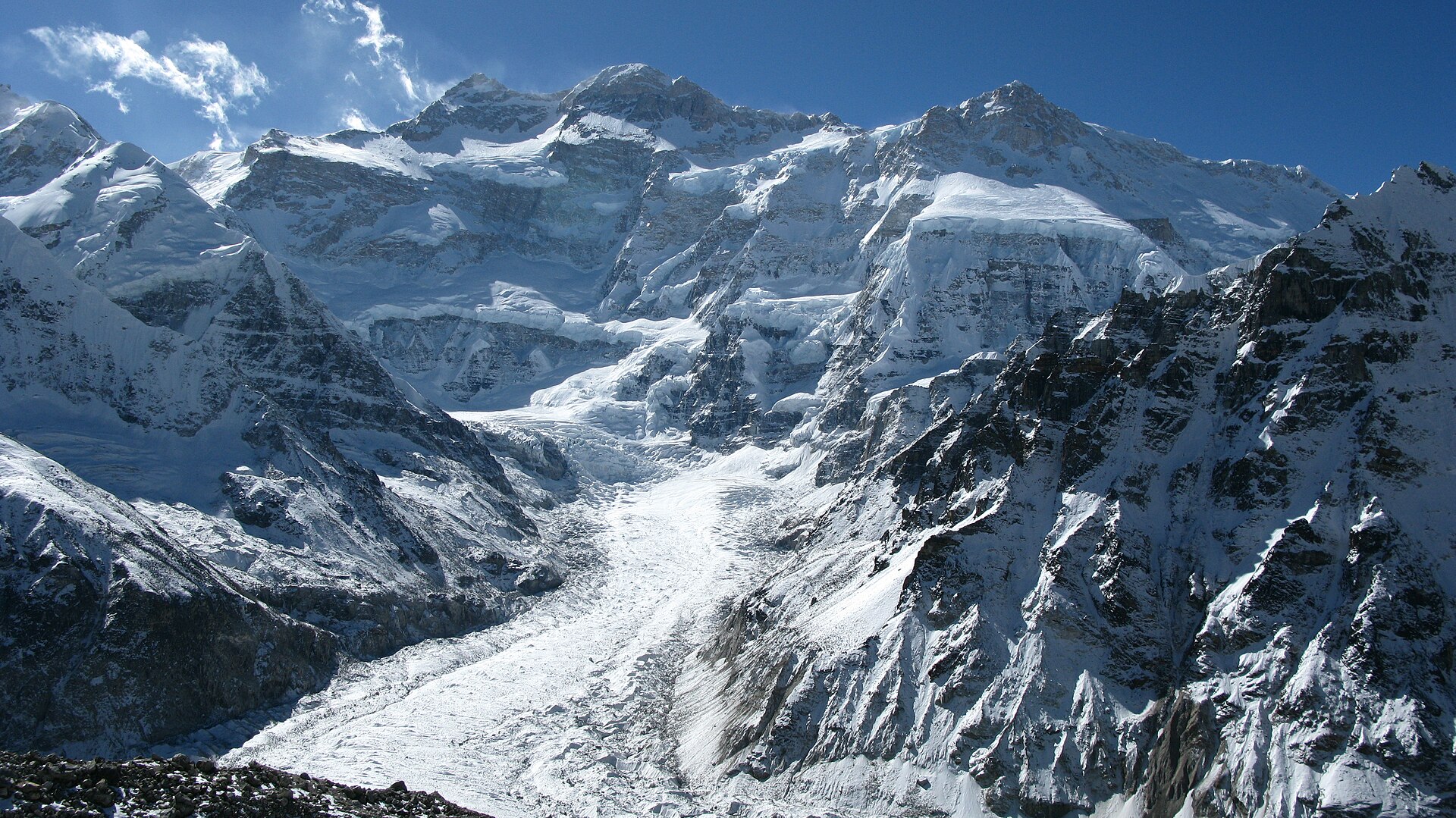
Mount Kanchenjunga (8,586m) is the third-highest mountain in the world and one of the most revered and least-visited of the fourteen 8,000-meter peaks. Straddling the border between Nepal's Taplejung District and the Indian state of Sikkim, the mountain's Tibetan name, meaning “Five Treasures of the Great Snow,” refers to its five major summits — Main, West (Yalung Kang), Central, South, and the satellite peak Kangbachen — each said to safeguard one of five sacred treasures.
Kanchenjunga was first climbed on 25 May 1955 by Joe Brown and George Band, members of a British expedition led by Charles Evans, via the Southwest Face above the Yalung Glacier. In a gesture that has shaped Kanchenjunga mountaineering ever since, the pair stopped a few feet below the true summit, honouring an assurance given to the Sikkimese authorities that the sacred top of the mountain would remain untrodden. Since that ascent, Kanchenjunga has consistently ranked among the most rarely summited 8,000-meter peaks, attempted by only a fraction of the expeditions that head to Everest or Manaslu in any given season.
Today, most commercial expeditions, including this one, approach from the Nepalese side via the remote northeast valleys of Taplejung District, reaching Pangpema (North Base Camp) before climbing the North Ridge and Northeast Spur. The relative obscurity of this route, combined with the days of trekking required simply to reach Base Camp, gives the Kanchenjunga expedition a sense of genuine isolation that has largely disappeared from the more commercialized 8,000-meter peaks.
Just how rarely attempted Kanchenjunga remains is reflected in Nepal's own permit records: during the Spring 2026 season, the Department of Tourism issued climbing permits to only 36 mountaineers across four teams for Kanchenjunga Main, compared with well over a thousand permits issued for Everest in the same window. For climbers who have already ticked off the more crowded 8,000ers and are looking for a genuine high-altitude objective away from fixed-line traffic jams, Kanchenjunga remains one of the very few that still delivers that experience.
Kanchanjunga Expedition
Difficulty
10/10
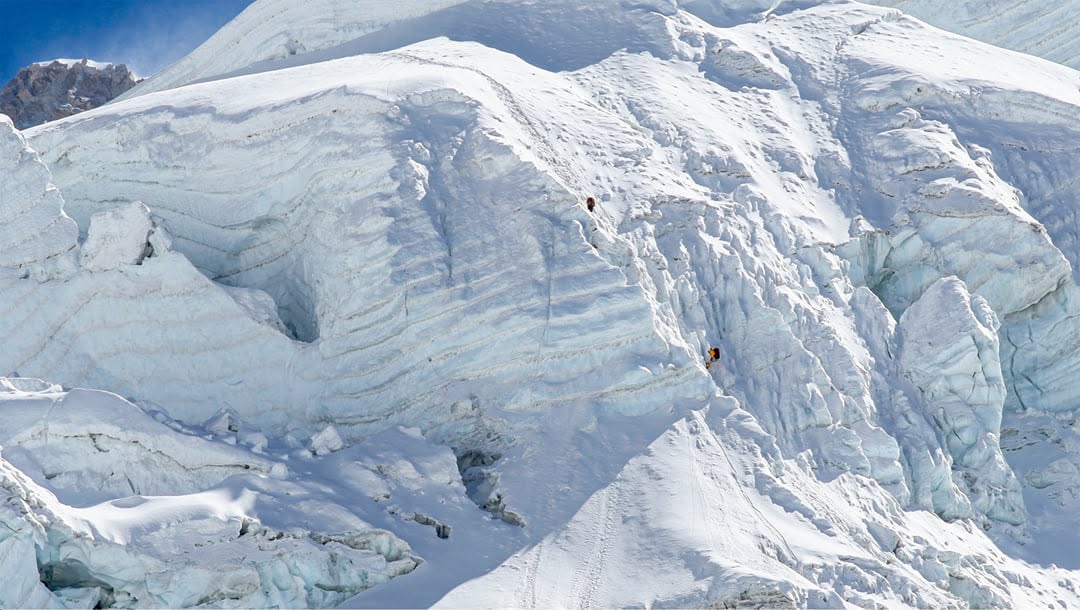
Kanchenjunga is widely regarded as one of the most demanding 8,000-meter expeditions in the world, and not because of technical climbing alone. Climbers face sustained step-kicking on steep snow and ice, multiple heavily crevassed icefalls, and a final, 700-plus-meter summit couloir climbed largely through the night. Kanchenjunga remains one of the least-attempted 8,000-meter peaks.
Activity
Mountaineering
Following the classic northeast approach, climbers progress through a structured system of four high camps while ascending the North Ridge and Northeast Spur toward the 8,586-meter summit. The climb involves navigating heavily crevassed glacier, crossing two technical icefall sections between approximately 6,000m and 7,000m, and ascending steep snow and ice terrain using fixed ropes and ascenders.
Best Season
Spring - Autumn
The pre-monsoon spring season (April–May) is the preferred window for the Kanchenjunga expedition, offering the most stable high-altitude weather and the longest stretch of climbable days before the monsoon arrives from the south. Snow conditions on the icefalls and upper couloir are generally more predictable in spring, and route-fixing is typically completed during this period. The post-monsoon autumn window (September–October) is occasionally used but offers a shorter and less reliable weather.
Max Elevation
0
At 8,586 meters, Kanchenjunga is the third-highest mountain on Earth and the highest peak lying substantially within Nepal's borders, on the frontier with Sikkim, India. Despite ranking below Everest and K2 in height, Kanchenjunga has one of the lowest success rates among the 8,000-meter peaks, owing to its remoteness, unpredictable weather, and the sheer scale of its upper mountain.
Location
Nepal
Mount Kanchenjunga rises along the Nepal–Sikkim (India) border in the Taplejung District of eastern Nepal, within the Kanchenjunga Conservation Area. Its name, derived from the Tibetan “Kang-chen-dzö-nga,” translates to “Five Treasures of the Great Snow,” a reference to the mountain's five distinct summits — Main, West (Yalung Kang), Central, South, and the satellite peak Kangbachen. On the Sikkimese side of the border, Kanchenjunga is revered as a guardian deity, a belief that led the first ascensionists in 1955 to stop a few feet short of the true summit out of respect for local custom — a tradition many expeditions, including ours, continue to honour. Far less developed than the Everest or Annapurna regions, the Kanchenjunga region offers an authentic, low-traffic Himalayan experience from the very first day of trekking.
Transportation
Flight - Jeep - Trek
The expedition begins with a short domestic flight from Kathmandu to Bhadrapur in the Terai lowlands, followed by a scenic but rugged jeep drive through Ilam and on to Taplejung, the trailhead for the approach to Kanchenjunga. From Taplejung, all onward movement to Pangpema Base Camp is on foot, as no roads or airstrips exist beyond this point. The return journey follows the same route, via Taplejung and Bhadrapur, back to Kathmandu.
Duration
0 Days
This 60-day Kanchenjunga expedition itinerary reflects the realities of climbing one of the most remote 8,000-meter peaks in the Himalaya. Roughly two weeks are spent on the approach trek alone, following the Tamor and Ghunsa river valleys deep into the Taplejung backcountry long before any road or airstrip is within reach. The climbing phase allows over a month for repeated acclimatization rotations through the high camps, weather-dependent route fixing, and a realistic summit window, with built-in contingency days to absorb the storms and high winds that frequently affect Kanchenjunga's upper mountain.
Group Size
2 - 15
We run the Kanchenjunga expedition in small, carefully managed teams of 2 to 12 climbers, supported by a strong climbing Sherpa-to-climber ratio. Given the mountain's remoteness and limited external support options, smaller groups allow for more flexible rotation planning, closer monitoring of each climber's acclimatization, and faster decision-making when weather windows are short.
Accommodation
Hotel - Lodge - Tent
Full board meals — breakfast, lunch, and dinner — are provided throughout the trekking and expedition phases, supplemented with tea, coffee, and treated drinking water. Meals are planned around the high energy and nutrient demands of extended high-altitude climbing. Breakfast only is included during hotel stays in Kathmandu.
Price
$0
The Kanchenjunga Expedition is available from USD 23,000 per person, with Classic, Elite, and Luxury service tiers offering different levels of Sherpa support, supplemental oxygen, Base Camp comfort, and logistical backup. Final pricing depends on the selected package, group size, and any customization requested. Full inclusions and exclusions for each tier are listed in the Expedition Packages section below.
Food
B - L - D
Full board meals — breakfast, lunch, and dinner — are provided throughout the trekking and expedition phases, supplemented with tea, coffee, and treated drinking water. Meals are planned around the high energy and nutrient demands of extended high-altitude climbing. Breakfast only is included during hotel stays in Kathmandu.
Overview
Kanchenjunga is the third-highest mountain in the world and it is a very high mountain that has the height of 8,586 above sea level. It is among the most beautiful and most admired mountains across the world and is located on the border of Nepal and India, in the eastern side of Himalayas. It is so distant, with its difficult climbing routes and spectacular views, that Kanchenjunga Expedition is very attractive to the mountaineers and adventure tourists.
Kanchenjunga is translated as Five Treasures of the Snow. It is named so because it has five major peaks which are higher than the rest of the Himalayan terrain. These mountains, according to the locals, are said to contain the Holy treasures of gold, silver, gems, grain, and books of holy nature. The mountain is situated in Kanchenjunga conservation area that is a recovering area and possesses a rich biodiversity, glaciers, forest and traditional mountain culture.
Kanchenjunga can be only glorified due to its high altitude, but also due to its amazing sight. The landscape is covered with snowridges, deep valleys, alpine meadows and wild nature. Its trekking and climbing is less commercial and commercial compared to others, which gives the visitor the pure and calm Himalayan experience. It is special as it is so far, unlike other tallest mountains of the world.
Kanchenjunga is considered as one of the most difficult mountains that have an elevation higher than 8,000 metres. It is extremely high, the climate is volatile, the ice walls are steeper, it is threatened by avalanches and technical portions of climbing that causes it to be a major challenge even to the most experienced climbing team. Unlike a typical Everest expedition, which is supported by more established routes, larger climbing teams, and better infrastructure, climbing Kanchenjunga often requires greater self-reliance and endurance. It is then a choice of action to mountaineers in need of more challenging and less traffic adventure.
Its distance is also a contributor to the difficulty of the mountain as Kanchenjunga mountaineering is a remote mountain. It is also no easy task to even access the base camp itself, which may take long and hectic walks in rugged and remote regions. The rescue and communication and logistics operations are more complicated here than in mountains whose systems of expedition are more established. These are some of the factors that made the mountain to be considered as one of the challenging Himalayan climbs.
Kanchenjunga is very important in the spiritual aspect of the locals. The people around the mountain believe that the mountain is sacred to a number of individuals. Climbers have always made it a point to honour the local belief and not climb all the way to the highest peak. It has also got an environmental value, with the region being the home to the rare species of wildlife such as the snow leopards, the red pandas and the Himalayan black bears that find their habitat in the conservation area. This combination of natural beauty, ecology and cultural worship makes Kanchenjunga special in a sense of identity.
For climbers seeking an experience beyond the standard Everest expedition, Kanchenjunga offers a powerful alternative. It is not a mountain that you just climb but a challenge of power, patience, planning as well as respect for nature. It is a physically tough and psychologically tough journey but it is worth it all as the reward is a life-long experience of one of the most exotic and wildest mountains in the Himalayas.
Kanchenjunga has been turned into an embodiment of the natural grandeur, spiritual signification and mountainous challenge. It is the third highest mountain in the world but it is nonetheless high with its steep peaks, isolated wilderness and mystical climbing challenge. Kanchenjunga is also among the most captivating mountains in the world and it is a mountain that one had always wanted to experience a genuine high-altitude adventure.
Explore our journey on Instagram, Facebook & TikTok for photos, videos, and stories
Would you like to ask us in email info@himalayanmountaineering.com.
Itinerary
Outline Itinerary:
Note: This itinerary is subject to change based on weather conditions, acclimatization needs, and other unforeseen factors
Route Map
Gear List
Clothing & Equipment Checklist:
Base Layers:
Insulation Layers:
Outer Layers:
Headgear:
Gloves:
Footwear:
Climbing Gear:
Customization:
This itinerary can be tailored to meet individual preferences and requirements. For personalized expedition planning, please contact us at info@himalayanmountaineering.com.
Emergency Note:
In case of emergencies during the expedition, necessary arrangements, including helicopter evacuations, will be made. However, the associated costs must be borne by the clients themselves. It is mandatory for all participants to have comprehensive travel and rescue insurance.
Please note that the above details are based on general information about Kanchenjunga expeditions. For specific details and the most accurate itinerary, inclusions, and pricing, please contact Himalayan Mountaineering directly.
The Team
Kanchenjung will be Led by Ningma Dorje Tamang or another Mountain guide certified by IFMGA or NNMGA. This expedition requirese extreme endurance and will power. We will have a guide who will lead the team and have summited Kanchenjunga more than 3 times. We will have our small team in the base camp from different nationalities. Other team members includes 1:1 sherpa guide, cooks, helpers, porters and other kitchen staff along with base camp manager and weather forecast specialist working from the Kathmandu.
Packages
Kanchenjunga Classic
$23000
Kanchenjunga Classic
$23000
Booking
Official Booking Confirmation is made only after 20% deposit of the total amount of the Expedition. Please contact us through email or inquiry form so that we can talk and confirm our booking.
FAQ
Kanchenjunga is considered a serious and technically demanding 8,000er. Its remoteness, long summit day, steep snow and ice terrain, avalanche exposure, unpredictable weather, and complex logistics make it significantly more committing than peaks such as Manaslu or Cho Oyu.
Previous 8,000 m climbing experience is strongly recommended. Climbers should already be comfortable with fixed ropes, crampons, ascenders, rappelling, steep snow and ice, high-altitude camps, and prolonged exposure above 7,000 m.
Expeditions commonly approach the mountain through the Kanchenjunga region of eastern Nepal and establish a high-altitude camp system before making the summit attempt. The exact camp locations and route configuration can vary with seasonal snow and ice conditions.
Yes. Most commercially supported climbers use supplemental oxygen during the upper stages of the expedition and summit attempt. Oxygen strategy should be planned according to the climber's experience, acclimatization, climbing speed, and expedition logistics.
The upper mountain is remote and highly exposed, and climbers may face steep terrain, extreme altitude, cold, wind, fatigue, and a lengthy descent after the summit. Reaching the top is only half the objective—the team must retain enough physical and mental reserve to descend safely.
Gallery
Trip Inquiry
Search another peak or departure, or send your questions, preferred dates, group size, and expedition requirements — our team will get back to you.
Not sure which peak? Browse all expeditions or send us a message and we'll recommend one.