Loading
Preparing your Himalayan journey
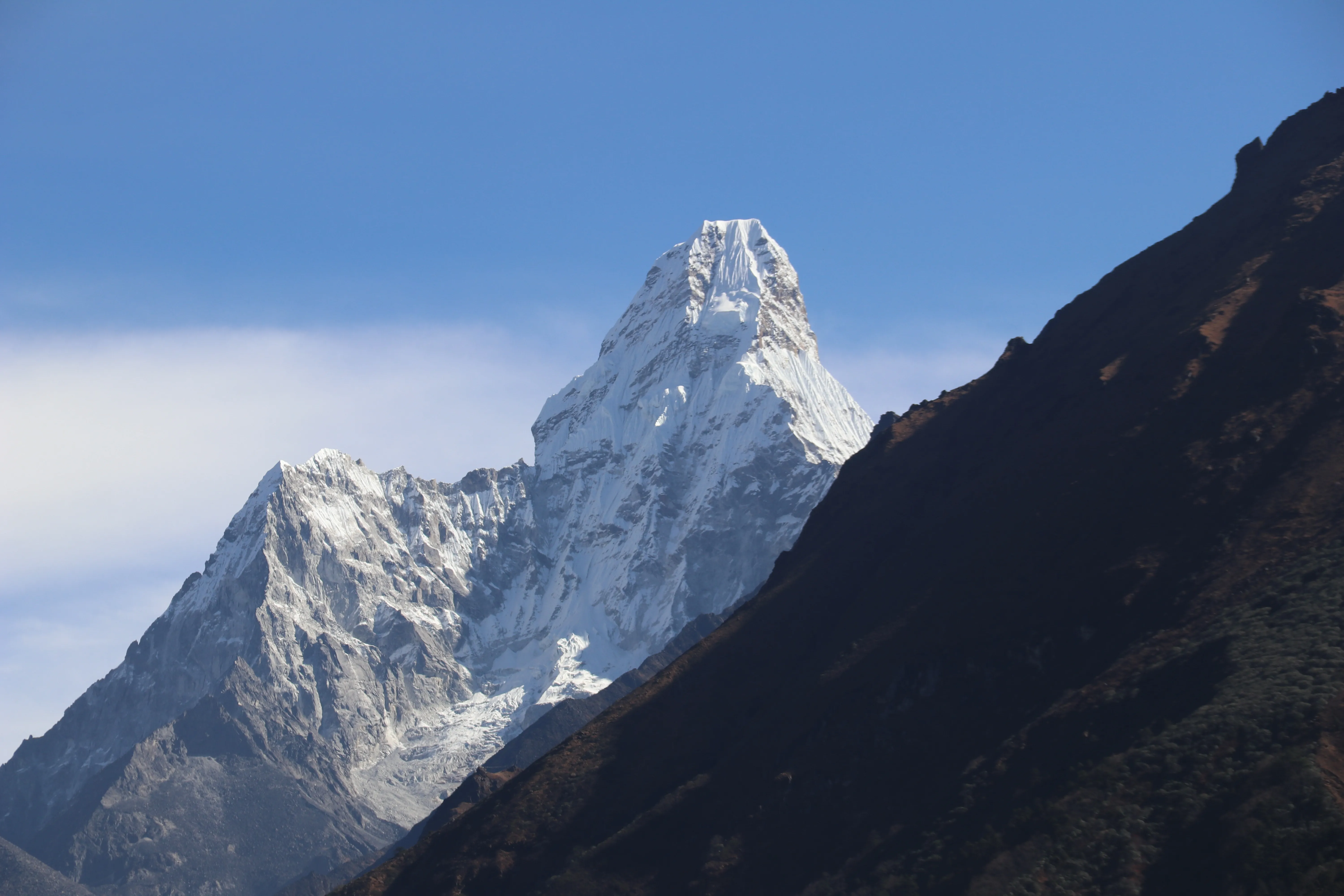
Mt. Amadablam Expedition
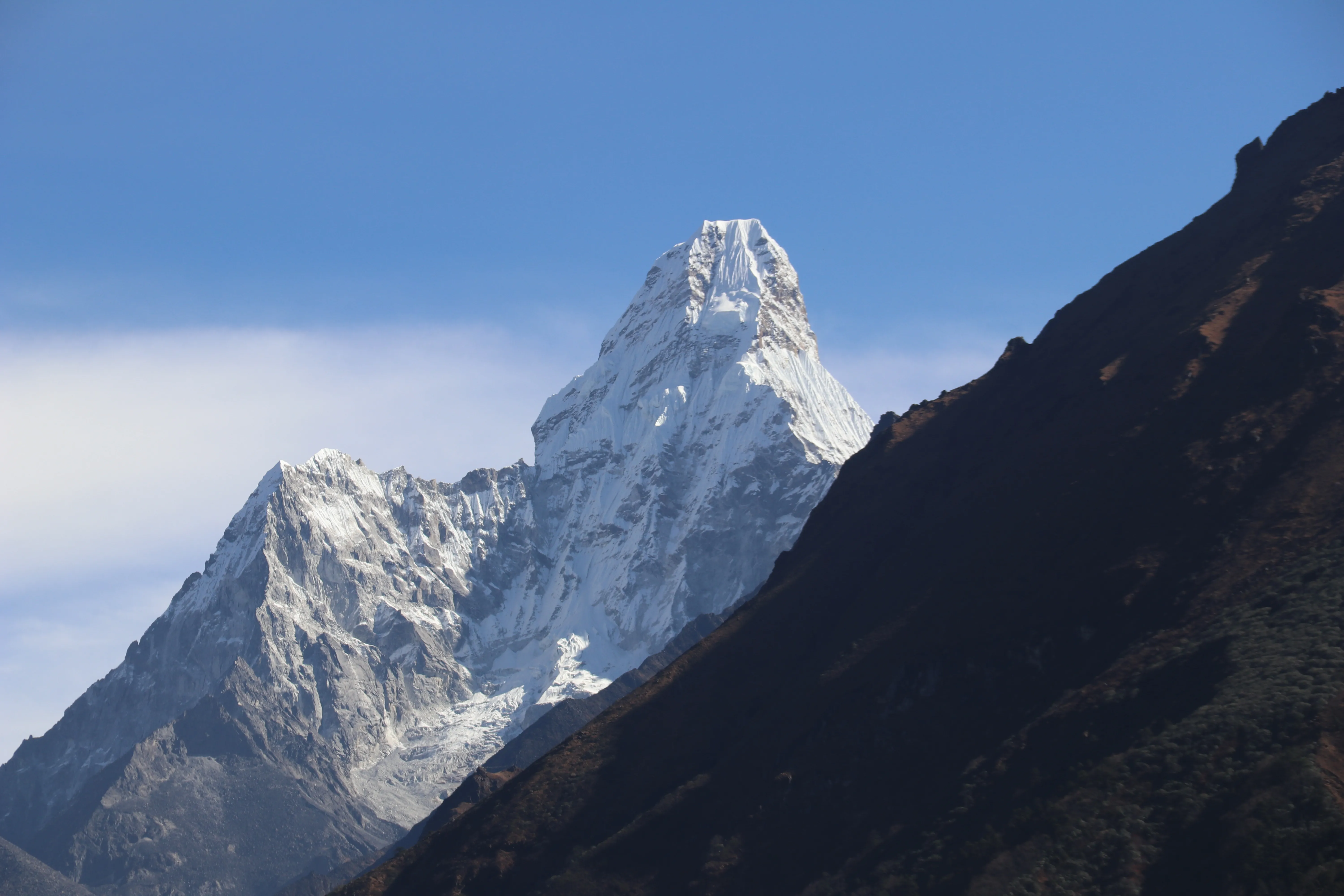
Mount Ama Dablam (6,812m), often called the “Matterhorn of the Himalayas,” is one of Nepal’s most iconic and technically rewarding climbing objectives. Located in the Khumbu region, the expedition follows the classic Southwest Ridge, combining exposed rock climbing, fixed-rope sections, steep snow and ice, and spectacular high-altitude ridge climbing.
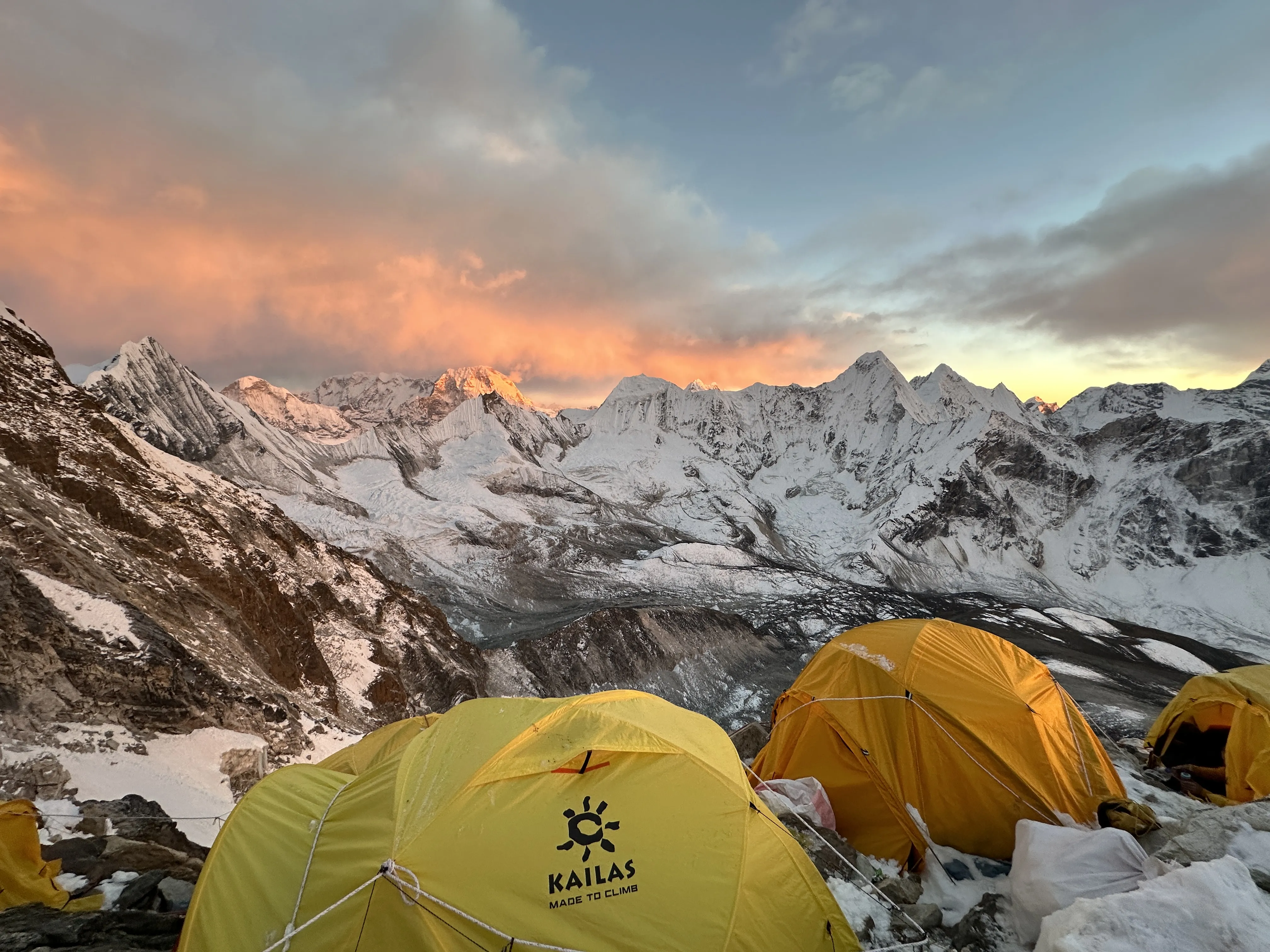
The route progresses from Base Camp (4,570m) to Camp 1 (5,700m), Camp 2 (6,100m), Camp 3 (6,400m), and the 6,812m summit. Major technical features include the Yellow Tower, Grey Couloir, and Mushroom Ridge, making Ama Dablam an excellent objective for experienced climbers seeking a serious technical Himalayan expedition.
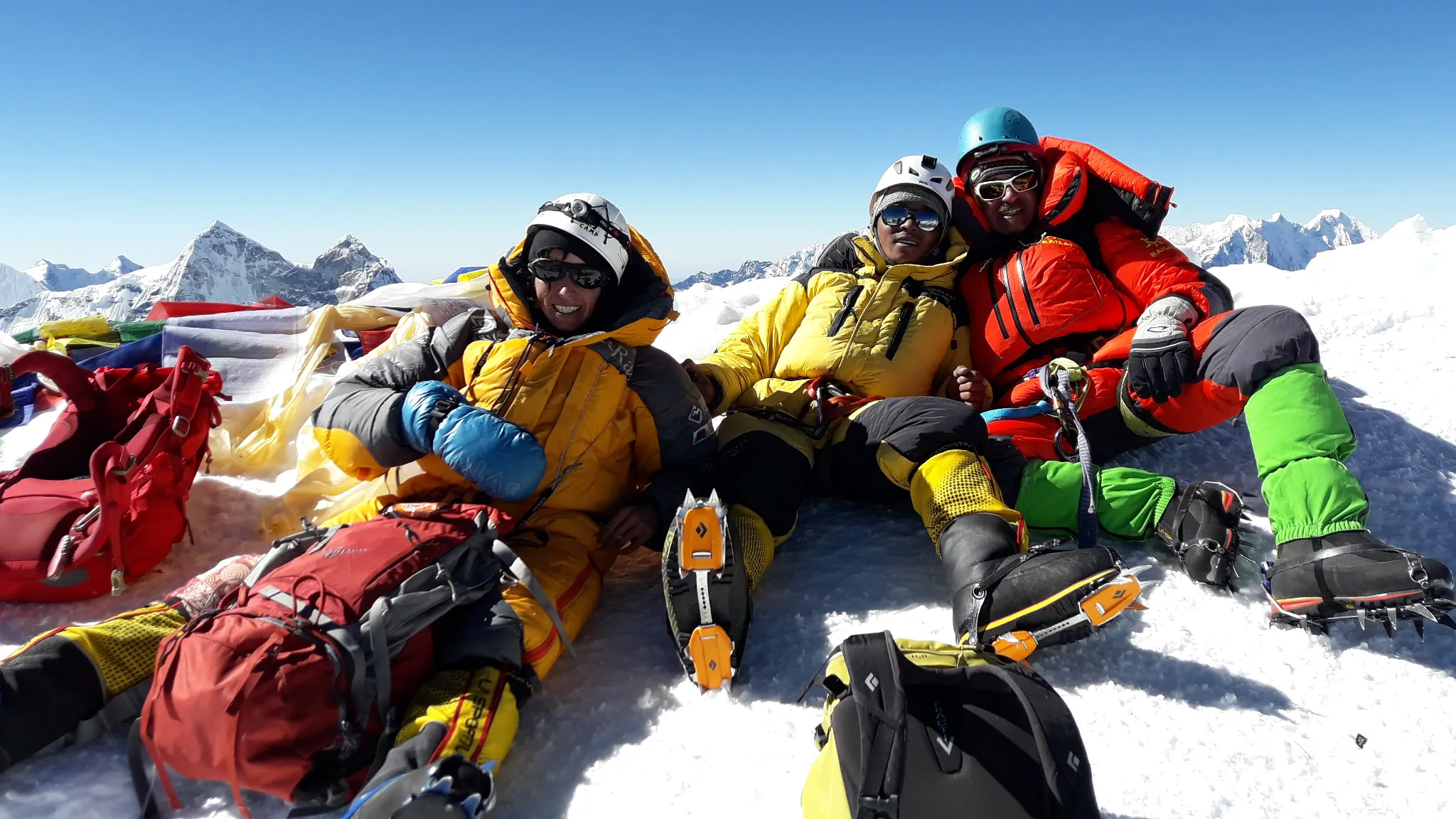
Himalayan Mountaineering Expedition operates a 30-day fully supported expedition with professional climbing Sherpa support, acclimatization rotations, high-camp logistics, weather forecasting, communication support, and managed Base Camp services.
Mt. Amadablam Expedition
Difficulty
8/10
Mount Ama Dablam is a technically demanding Himalayan climb where difficulty is defined more by terrain and exposure than altitude alone. The Southwest Ridge involves steep rock and mixed climbing, fixed-rope ascents, exposed traverses, narrow ridgelines, and sustained snow and ice sections at high altitude. Climbers should have solid technical mountaineering skills, strong physical conditioning, previous altitude experience, and the ability to move efficiently and confidently on exposed terrain.
Activity
Technical High-Altitude Mountaineering
Our Ama Dablam Expedition follows the classic Southwest Ridge, combining technical rock climbing, fixed-rope ascents, steep snow and ice sections, and exposed high-altitude ridges. The route progresses through Camp 1 (5,700m), Camp 2 (6,100m), and Camp 3 (6,400m) before the final summit climb to 6,812m. Key technical sections include the Yellow Tower, Grey Couloir, and Mushroom Ridge, requiring solid climbing skills, efficient rope techniques, and good high-altitude fitness.
Best Season
April–May / October–November
The primary climbing seasons for Mount Ama Dablam are autumn (October–November) and spring (April–May). Autumn is generally preferred for its stable post-monsoon weather, clearer visibility, reduced precipitation, and favorable snow and ice conditions on the Southwest Ridge. Spring also provides a reliable expedition window, with longer daylight hours and progressively warmer temperatures supporting acclimatization rotations and summit operations
Max Elevation
0 Meters
The expedition reaches its maximum elevation at the summit of Mount Ama Dablam (6,812m). Despite its comparatively lower altitude than Nepal’s 8,000m peaks, Ama Dablam presents a serious mountaineering objective due to its sustained technical climbing, exposed ridgelines, steep mixed terrain, and demanding high-altitude environment.
Location
Nepal
Solukhumbu Nepal, 27.86° N, 86.86° E Ama Dablam (6,812 m) is located in the Khumbu region of northeastern Nepal, within Sagarmatha National Park. Rising above the Imja Valley near Pangboche, the mountain lies along the famous Everest trekking corridor and is surrounded by some of the most spectacular peaks of the Khumbu Himal.
Transportation
flight - Jeep - Helicopter
We begin the expedition with a domestic mountain flight from Kathmandu to Lukla, followed by the trekking approach through the Khumbu Valley to Ama Dablam Base Camp. After the climb, we arrange either a trekking return to Lukla or a helicopter transfer from Base Camp, depending on the selected package. Our team coordinates all required transfers and expedition logistics to ensure efficient movement throughout the journey.
Duration
0 Days
Our 30-day Ama Dablam Expedition is structured to provide sufficient time for the Khumbu approach, progressive acclimatization, technical preparation, high-camp rotations, and the summit attempt. We also maintain contingency time for changing weather and route conditions, allowing our expedition team to adjust the climbing schedule and select the most suitable summit window.
Group Size
2-8
We operate Ama Dablam expeditions with a controlled team size of 2-8 climbers, allowing us to maintain effective expedition management and personalized climbing support. Smaller, well-managed teams enable better communication, efficient acclimatization rotations, coordinated high-camp movement, and closer attention to each climber’s performance and safety throughout the expedition.
Starting Date
Oct. 6, 2026
We operate Ama Dablam expeditions during the main spring and autumn climbing seasons, with departures scheduled primarily between April–May and October–November. Starting dates can be arranged according to the climber’s preferred schedule, while considering seasonal weather patterns, route conditions, permit arrangements, and overall expedition logistics.
Accommodation
Hotel - Lodge - Tent
We provide accommodation according to each stage of the expedition, including comfortable hotels in Kathmandu, mountain teahouses during the Khumbu approach, and fully managed expedition camps at Ama Dablam Base Camp and higher camps. Our Base Camp facilities are organized to support proper rest, nutrition, hygiene, communication, and recovery between climbing rotations
Price
$ 0
Our Ama Dablam Expedition starts from USD 7,500 per person, covering the essential climbing logistics and professional expedition support required for a well-organized ascent. Final pricing may vary depending on group size, level of climbing support, transportation preferences, and customized services requested by the climber.
Food
Breakfast - Lunch - Dinner
We provide nutritious, high-energy meals throughout the trekking and expedition period, including breakfast, lunch, dinner, tea, coffee, and safe drinking water. Meals are planned to support energy requirements, recovery, and performance at altitude, while only breakfast is provided during the Kathmandu hotel stay.
Overview
Mount Ama Dablam (6,812m) stands as one of the most iconic and technically demanding peaks in the entire Himalayan range. Rising above the Khumbu Valley in the Everest region of Nepal, Ama Dablam — meaning “Mother’s Necklace” in Sherpa language — derives its name from the long ridges flanking the mountain like a mother’s arms, and the hanging glacier at its center resembling the traditional double-pendant (Dablam) worn by Sherpa women.
First summited in 1961 by an Anglo-American-New Zealand team via the Southwest Ridge — the same route followed today — Ama Dablam has since become one of the most desirable technical climbing objectives in the Himalayas. Often called the “Matterhorn of the Himalayas” for its dramatic, sharply-pointed profile, Ama Dablam consistently ranks among the three most permitted expedition peaks in Nepal. Despite sitting well below the 8,000-meter threshold, the mountain’s technical demands mean that experienced Everest summiteers have encountered serious difficulties on its upper ridges, a testament to the quality and seriousness of the climbing terrain.
The expedition provides an exceptional combination of world-class technical mountaineering, breathtaking Khumbu scenery, rich Sherpa cultural heritage, and genuine Himalayan adventure, making it one of the finest mountaineering experiences available anywhere in the world.
The Khumbu region surrounding Ama Dablam is one of Nepal’s most ecologically rich and visually spectacular Himalayan environments, protected under the Sagarmatha National Park — a UNESCO World Heritage Site. As the expedition progresses from Lukla toward Base Camp, the landscape transitions through multiple distinct ecological zones, from temperate forests and river valleys to alpine meadows, glacial moraines, and high-altitude Mountain environments.
The lower and mid-altitude sections of the approach support forests of rhododendron (Nepal’s national flower), pine, juniper, and birch, gradually giving way to sparse alpine vegetation and glacial terrain at higher elevations. The Khumbu region is home to diverse Himalayan wildlife including Himalayan Tahr, snow leopard, musk deer, Himalayan marmot, and the Himalayan Monal — Nepal’s national bird. This rich ecological diversity adds a compelling natural dimension to the expedition, enriching the journey to Base Camp with color, wildlife, and one of the Himalayas’ most iconic landscapes.
Beyond its mountaineering significance, the Khumbu region offers one of Nepal’s most authentic and deeply rooted Himalayan cultural experiences. The region is the ancestral homeland of the Sherpa people, whose extraordinary mountaineering heritage, Buddhist traditions, and warm hospitality have shaped the history of Himalayan exploration. The expedition route passes through iconic Sherpa settlements including Namche Bazaar, Tengboche, and Pangboche, each offering a window into a way of life that has evolved over centuries in one of the world’s most demanding mountain environments.
The Tengboche Monastery, situated directly beneath Ama Dablam at 3,867m, is one of the most revered Tibetan Buddhist monasteries in the Himalayas, and the traditional Puja ceremony performed at Base Camp before the climb reflects the deep spiritual connection between Sherpa culture and the mountains they call home. This blend of world-class mountaineering, Himalayan traditions, and genuine Sherpa culture gives the Ama Dablam expedition a dimension that extends far beyond the technical challenge of reaching the summit.
The Ama Dablam Expedition follows the classic Southwest Ridge route, the same line established during the first ascent in 1961. The route progresses from Base Camp (4,570m) through a structured series of high camps at Camp 1 (5,700m), Camp 2 (6,100m), and Camp 3 (6,400m), combining moderate ridge walking, technical rock climbing, steep ice sections, and sustained high-altitude movement before the final summit push to 6,812m.
* Scenic Khumbu Approach
The expedition begins with a domestic flight to Lukla followed by trekking through the iconic Khumbu Valley, passing through Namche Bazaar, Tengboche, and Pangboche before veering off the main Everest trail toward Ama Dablam Base Camp. This gradual approach provides natural acclimatization and immerses climbers in the spectacular Khumbu landscape before the technical climbing begins.
* Technical Climbing Preparation
After arriving at Base Camp, climbers participate in essential training and expedition preparation, including:
* The Climbing Route Involves:
Note: Route conditions may vary depending on snowfall, temperature, and prevailing weather patterns throughout the expedition season.
* Acclimatization Rotations through Higher Camps
To optimize physiological adaptation and reduce altitude-related risks, climbers complete multiple rotation climbs through the higher camps before committing to the final summit push. Following the proven “climbs high - sleep low” principle, these rotations help build physical readiness and allow the body to adjust progressively to the decreasing oxygen levels encountered above Base Camp.
* Key Technical Challenges above Camp 2
Key challenges in the upper mountain include:
At these elevations, success depends not on speed but on controlled movement, sound technical execution, effective acclimatization, and consistent support from the expedition team. The upper mountain represents the defining stage of the Ama Dablam Expedition, where preparation, patience, and mountain judgment become essential for a safe and rewarding summit experience.
Many mountaineers climb Ama Dablam as preparation for an Everest expedition. The mountain is a good hiking experience to climber for altitude climbing.
This climb helps climbers:
For climbers who dream of standing on the summit of Mount Everest, completing Ama Dablam can be an important step before attempting a full Everest expedition.
Explore our journey on Instagram, Facebook & TikTok for photos, videos, and stories
Would you like to ask us in email info@himalayanmountaineering.com.
Itinerary
Outline Itinerary
Day 01:
Arrival in Kathmandu
Overnight in Hotel – 1,400 meters
Day 02:
Expedition Preparation & Final Briefing
Overnight in Hotel – 1,400 meters
Day 03:
Fly to Lukla & Trek to Phakding
Overnight in Lodge – 2,610 meters
Day 04:
Trek to Namche Bazaar
Overnight in Lodge – 3,440 meters
Day 05:
Acclimatization Day at Namche Bazaar
Overnight in Lodge – 3,440 meters
Day 06:
Trek to Debuche
Overnight in Lodge – 3,820 meters
Day 07:
Trek to Pangboche
Overnight in Lodge – 3,985 meters
Day 08:
Trek to Ama Dablam Base Camp
Overnight in Tent – 4,600 meters
Day 09:
Rest, Equipment Check & Technical Preparation
Overnight in Tent – 4,600 meters
Day 10–24:
Ama Dablam Climbing Period & Summit Attempt
Overnight in Tent – Base Camp & Higher Camps
Day 25:
Contingency Day
Overnight in Tent – 4,600 meters
Day 26:
Descend to Pangboche
Overnight in Lodge – 3,985 meters
Day 27:
Trek to Namche Bazaar
Overnight in Lodge – 3,440 meters
Day 28:
Trek to Lukla
Overnight in Lodge – 2,860 meters
Day 29:
Fly to Kathmandu
Overnight in Hotel – 1,400 meters
Day 30:
Final Departure
Expedition Concludes
Gear List
Gear Checklist
🧗 Ama Dablam Climbing Gear Checklist
🏕️ Personal Gear:
👕 Clothing:
Trekking Layers:
Climbing Layers:
Gloves & Mitts:
Headwear:
🥾 Footwear:
🧰 Technical Climbing Equipment:
🧼 Miscellaneous:
🧺 Optional/Recommended Extras:
Packages
Mt Ama Dablam Package
$7,500 Per Person
Our Mount Ama Dablam Climbing Package Includes:
1. All airport and hotel transfer domestic, international and Helicopter from Amadablam B.C to Lukla.
2. 5 nights' accommodation at 3-4-star hotel with breakfast.
3. Domestic flight from Kathmandu to Lukla and Back.
4. Kathmandu city sightseeing tour as per the above itinerary and entrance fees.
5. Meals (breakfast, lunch and dinner) with Tea & coffee and hot/cold filter water during the trek, base camp and all other places than Kathmandu.
6. Lodge during trek and tented accommodation during climbing period on sharing basis. We will have a well settled base camp service in small lodge of Ama Dablam Base Camp.
7. Mountain Guide and Experienced One climbing Sherpa each during the climb from Base Camp to Base Camp who will help you for your summit and take care of you during the whole climbing.
8. One porter for one person from Lukla to Base camp and Back to Lukla.
9. Cook, helper, porters and their food & accommodation, salary, equipment’s & insurance for base camp and high camp services.
10. Camping Equipment’s, Tents, Kitchen Utensils and Mattresses with high foods.
11. 1 Duffle Bag, Radio Set, Satellite Phone, Map, Weather Report, Heater, Solar or Generator in Base Camp for charging mobile, laptop etc.
12. Climbing permit of Ama Dablam, National park fees, Rural Municipality Fees.
13. Waste, members stool and garbage management fees and all necessary permits.
14. Government Liason officer fees with his equipment, insurance, gears, accommodation and foods.
15. Cost of Rope Fixing Sherpa Team
16. Training of using gears, climbing ladder, rope and other important knowledge and sharing experience of the expedition.
17. First Aid Medical Kit box, frequent medical checkup and necessary emergency equipment’s.
18. Office Service charge and Certificates.
Mt Ama Dablam Package
$7,500 Per Person
Our Mount Ama Dablam Climbing Package Includes:
1. All airport and hotel transfer domestic, international and Helicopter from Amadablam B.C to Lukla.
2. 5 nights' accommodation at 3-4-star hotel with breakfast.
3. Domestic flight from Kathmandu to Lukla and Back.
4. Kathmandu city sightseeing tour as per the above itinerary and entrance fees.
5. Meals (breakfast, lunch and dinner) with Tea & coffee and hot/cold filter water during the trek, base camp and all other places than Kathmandu.
6. Lodge during trek and tented accommodation during climbing period on sharing basis. We will have a well settled base camp service in small lodge of Ama Dablam Base Camp.
7. Mountain Guide and Experienced One climbing Sherpa each during the climb from Base Camp to Base Camp who will help you for your summit and take care of you during the whole climbing.
8. One porter for one person from Lukla to Base camp and Back to Lukla.
9. Cook, helper, porters and their food & accommodation, salary, equipment’s & insurance for base camp and high camp services.
10. Camping Equipment’s, Tents, Kitchen Utensils and Mattresses with high foods.
11. 1 Duffle Bag, Radio Set, Satellite Phone, Map, Weather Report, Heater, Solar or Generator in Base Camp for charging mobile, laptop etc.
12. Climbing permit of Ama Dablam, National park fees, Rural Municipality Fees.
13. Waste, members stool and garbage management fees and all necessary permits.
14. Government Liason officer fees with his equipment, insurance, gears, accommodation and foods.
15. Cost of Rope Fixing Sherpa Team
16. Training of using gears, climbing ladder, rope and other important knowledge and sharing experience of the expedition.
17. First Aid Medical Kit box, frequent medical checkup and necessary emergency equipment’s.
18. Office Service charge and Certificates.
Booking
Official Booking Confirmation is made only after 20% deposit of the total amount of the Expedition. Please contact us through email or inquiry form so that we can talk and confirm our booking.
FAQ
Ama Dablam is a technically demanding Himalayan climb, involving exposed ridges, steep rock and ice sections, fixed ropes, and mixed terrain. Previous technical climbing and high-altitude experience are strongly recommended.
The main climbing seasons are spring (April–May) and autumn (October–November). Autumn is particularly popular for its generally stable post-monsoon weather, clear visibility, and favorable climbing conditions.
We follow the classic Southwest Ridge, the route used during the mountain’s first ascent. The climb progresses through Base Camp and three high camps before reaching the 6,812m summit.
Important technical sections include the Yellow Tower, Grey Couloir, and Mushroom Ridge, together with exposed rock traverses, fixed-rope climbing, and steep mixed snow and ice terrain.
Yes. Climbers should be comfortable using crampons, ice axe, harness, ascender, descender, and fixed ropes, and should have experience on steep and exposed mountain terrain. The expedition also includes technical preparation at Base Camp.
Supplemental oxygen is not included as a standard requirement in the basic expedition service, but it can be arranged depending on the climber’s requirements and selected services.
Yes. Climbers must have appropriate insurance covering mountaineering up to 6,812m, emergency medical treatment, helicopter evacuation, and high-altitude search and rescue.
Yes. We can tailor the expedition according to your climbing experience, schedule, support requirements, and specific expedition goals.
Gallery
Trip Inquiry
Search another peak or departure, or send your questions, preferred dates, group size, and expedition requirements — our team will get back to you.
Not sure which peak? Browse all expeditions or send us a message and we'll recommend one.