The Everest Expedition : Complete Guide to Reaching the Roof of the World
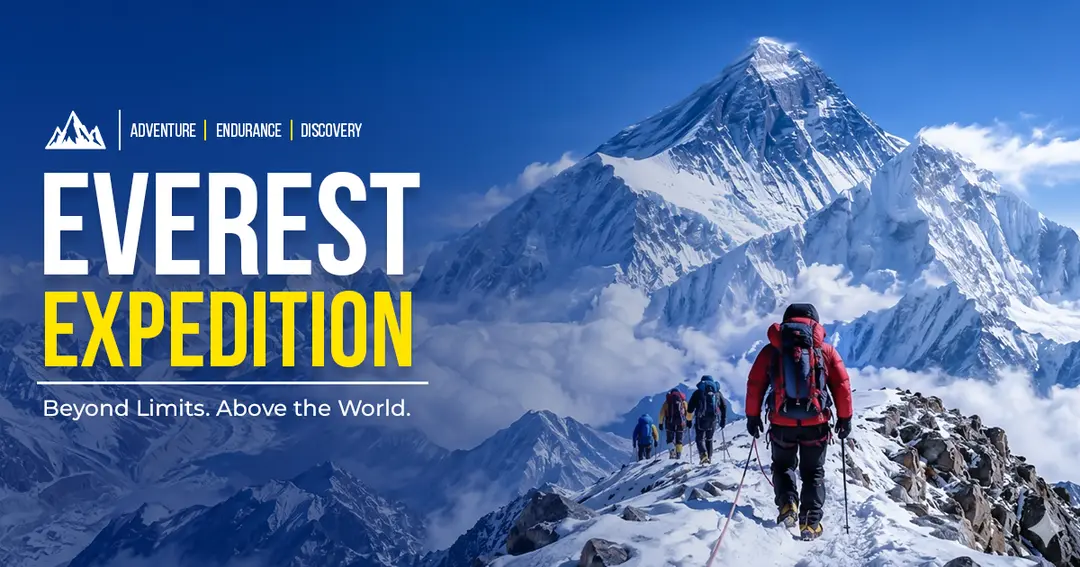
Since the beginning of time, people who enjoy outdoor activities have wanted to go hiking at the top of Mount Everest. Mount Everest is the highest point on earth at 29,032 feet (8,848.86 m.) and also one of the most prized summits in the world. An expedition to Mount Everest is not just another hike; it is an adventure - a life-changing experience that will test one's limits of stamina and human determination/human resilience through our body, mind and spirit.
If you want to accomplish your goal of standing on top of the highest mountain in the world (Mount Everest), then you must know what an "Everest Expedition" involves. You will need to know about the preparation required, the expense anticipated, how long the expedition takes and what kinds of things will challenge you when attempting this once-in-a-lifetime opportunity.
An Everest Expedition and Its Components
Typically climbers in an Everest expedition use the services of a guide (i.e., guide) to assist them in their goal of climbing Mount Everest to the summit. Most climbers utilize the South Col route which begins in Nepal as the starting point for their actual climbing efforts. This is the same route taken by Sir Edmund Hillary and Tenzing Norgay when they were the first climbers to finally reach the summit of Mount Everest (1953). In addition to being a well-established route with a proven history of success, it is also the most commonly utilized route at the present time because it has a clearly defined infrastructure, adequate facilities throughout its length, and is therefore also the safest route.
On average, completing an Everest expedition will take six-nine weeks, depending on weather patterns and the climbing schedule. The reason that finishing an Everest expedition takes this long is due to the technical skills that climbers will need when climbing Mount Everest, such as technical climbing skills and experience in climbing at high altitudes. Furthermore, the period of time it takes for climbers to become acclimated to this type of environment (4-6 weeks) will be longer than what is required in order to become acclimated to a standard trekking environment.
The Reason Why You Should Attempt An Everest Expedition
Everest is regarded as one of the most prestigious achievements one can achieve from climbing. The mountain is laden with challenges that few mountains can provide.
Extreme altitude
The number one challenge encountered on an Everest Expedition is the lack of oxygen. Above 8,000 meters is a Death Zone, where the amount of available oxygen is significantly less than at sea level; thus, the impact of this environment can greatly affect the human body.
Harsh Weather
Even in the climbing season, the weather can reach dangerously low temperatures with serious concerns of strong winds, snow, and quickly changing weather patterns; therefore, every expedition to Everest will be unpredictable during the total time spent at Everest.
Physical and Mental Endurance
Doing an expedition to Everest requires the climber to have superior endurance and mental attitude. Most of the time spent doing the whole expedition to Everest is under poor, harsh conditions while doing the acclimatization rotations between camps.
Everest Expedition Path Described
The route, which is the Popular route for a guided expedition, starts from Nepal. Traverse the south col route on Mount Everest.
Everest Base Camp
From Kalapathar, you will traverse to basecamp at 5,364 metres above sea level, with basecamp acting as the primary operational area for all climbers making a summit.
Khumbu Icefall
The slide of the Khumbu Icefall is one of the highest-risk areas of the climb. With multiple teams making their way through here throughout their expedition, climbers will be witness to the dangers that face them multiple times throughout their expedition while negotiating the ice tower formations that continually move with the glacier.
Camps 1, 2 & 3
Climbers will make their way up and down through camps1,2 & 3, utilising them to become acclimatised to the effects of altitude and condition their bodies for the final push to summit Mount Everest.
South Col and Summit push
The final push to the summit of Mt. Everest takes place at Camp 4 (7,900m), South Col, where climbers make their move from here to the summit. The average time from the South Col to the summit Camp 4 takes between 10-18 hours.
Preparation for Climbing A Mountain
Although having a plan for an Everest expedition is good, a quality plan requires more than that. To sum it up: if there is anything you need to do to prepare to climb Mount Everest, this program should be undertaken over at least one year's time period.
Physical Conditioning
All climbers can enhance their physical conditioning by participating in the following activities regularly:
Endurance (cardiovascular) conditioning;
- Running
- Bicycling;
- Hiking
- Stair climbing
As well as providing strong leg, core, and upper body strength to support carrying a lot of gear and walking through rough and uneven terrain on an Everest expedition.
Elevation Learning
Climbers should complete other high-altitude climbs prior to their attempt on Mt. Everest. Mountain climbs of more than 20,000 ft. altitude like Island Peak, Mera Peak, and/or Lobuche Peak are excellent preparatory climbs for climbers attempting to reach the summit of Mt. Everest.
Psychological Preparation
The mental aspect of your preparation for an Everest expedition, while often overlooked, is equally important. Mountaineering is physically demanding; therefore, patience and focus are essential during long days and unpredictable weather followed by long times away from home.
Cost of Expedition to Mount Everest
There are many questions climbers want to have answered regarding climbing to Mount Everest including "What is the cost of the climb?". The overall cost of climbing to Mount Everest varies based on several factors including:
- Climbing permits
- Sherpa support
- Oxygen systems
- Base Camp services
- Accommodation options
- Food and food supplies
- Transportation
- Technical climbing equipment
The Importance of Sherpas in a Guided Everest Expedition
A guided Everest expedition would not be possible without the input of a Sherpa. The trained mountain professionals are indispensable at every stage of the climb.
The Sherpas' responsibilities include:
- Route preparation
- Rope fixing
- Carrying gear to camps
- Setting up the camps
- Managing safety/hazards
- Providing emergency assistance
Acclimatization During A Nepal Mountaineering Expedition
Proper acclimatization is critical to the success of all Nepal mountaineering expeditions.
At altitude, low levels of oxygen mean that climbers need time to adjust to these changing conditions.
During an Everest expedition I will use a "climb high, sleep low" strategy which means going up to a higher altitude than sleeping at a lower elevation to ensure that I am able to perform my best on summit attempts.
Acclimatization is one of the most significant factors in high-altitude climbing and should be given the time it deserves.
The summit push signifies the most important part of an expedition to the summit of Mt. Everest.
Typically, climbers leave Camp IV late at night to begin their long climb up to the summit by way of several major landmarks including the Balcony, South Summit, and Hillary Step, before reaching the highest point in the world.
Reaching the summit after weeks of hard work forms an incredible memory, and the views over the Himalayas reward all of the climbers for the challenges they faced.
Climbers will often refer to completing an expedition to Everest as a ‘lifetime achievement’.
Is climbing Everest worth coming?
Most serious mountaineers would answer yes.
An expedition to Everest is not just about reaching the summit of Everest, but personal growth, overcoming adversity, and expiring in one of the world’s most extraordinary environments.
There are many lessons learnt through the journey from Base Camp to the final few metres of the summit ridge such as patience, perseverance and how to respect nature, as well as many incredible memories formed during this journey.
Conclusion
Mount Everest is an adventure beyond comparison. No matter whether your desire is simply to complete an expedition to one of the world's highest peaks, gain experience climbing at extreme altitudes, or simply challenge yourself in the Himalayas, Mount Everest is the place for you.
The journey of an Everest Expedition remains with you throughout your life as your experience of climbing on top of the world.