Loading
Preparing your Himalayan journey
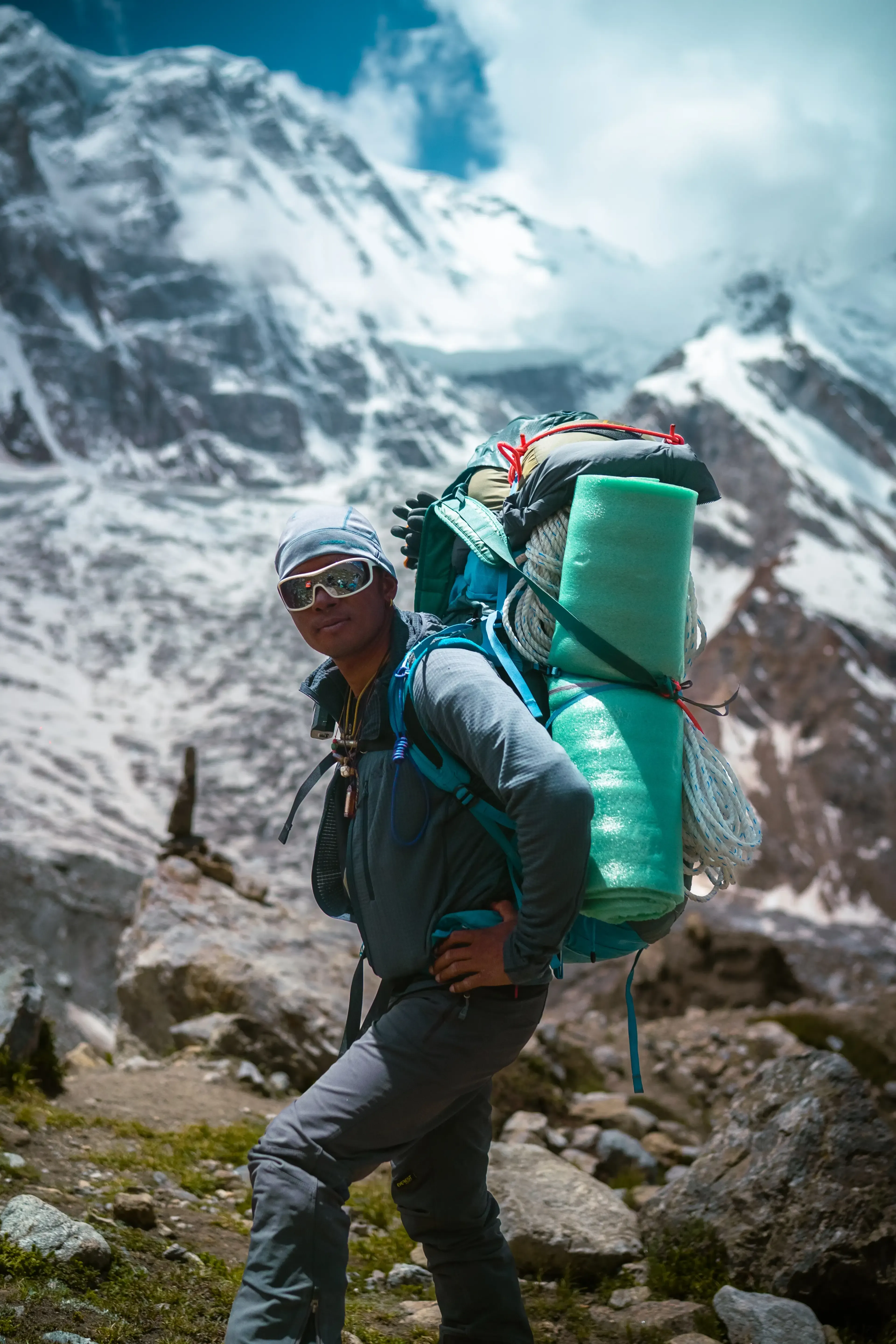
Nanga Parbat Expedition
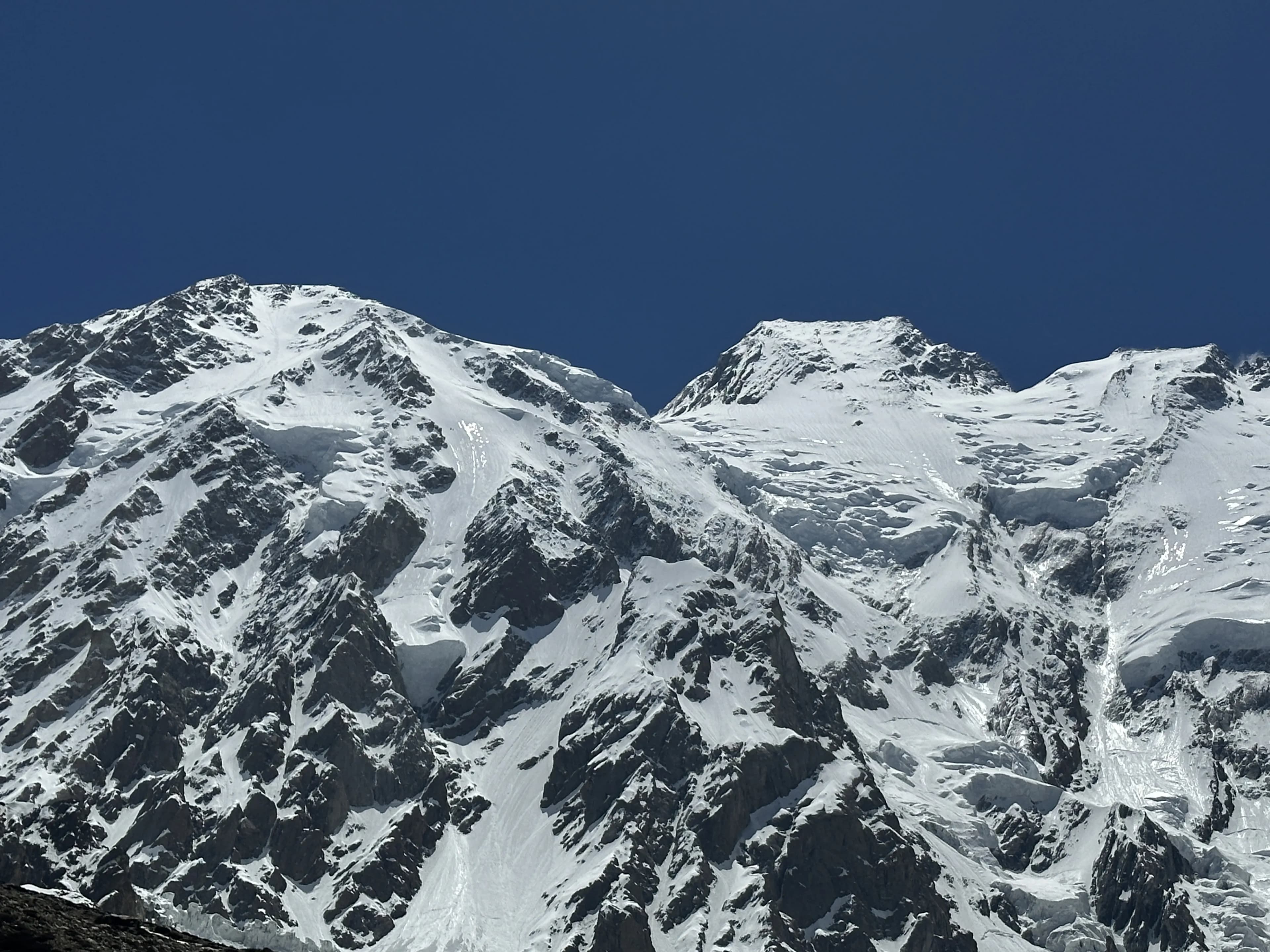
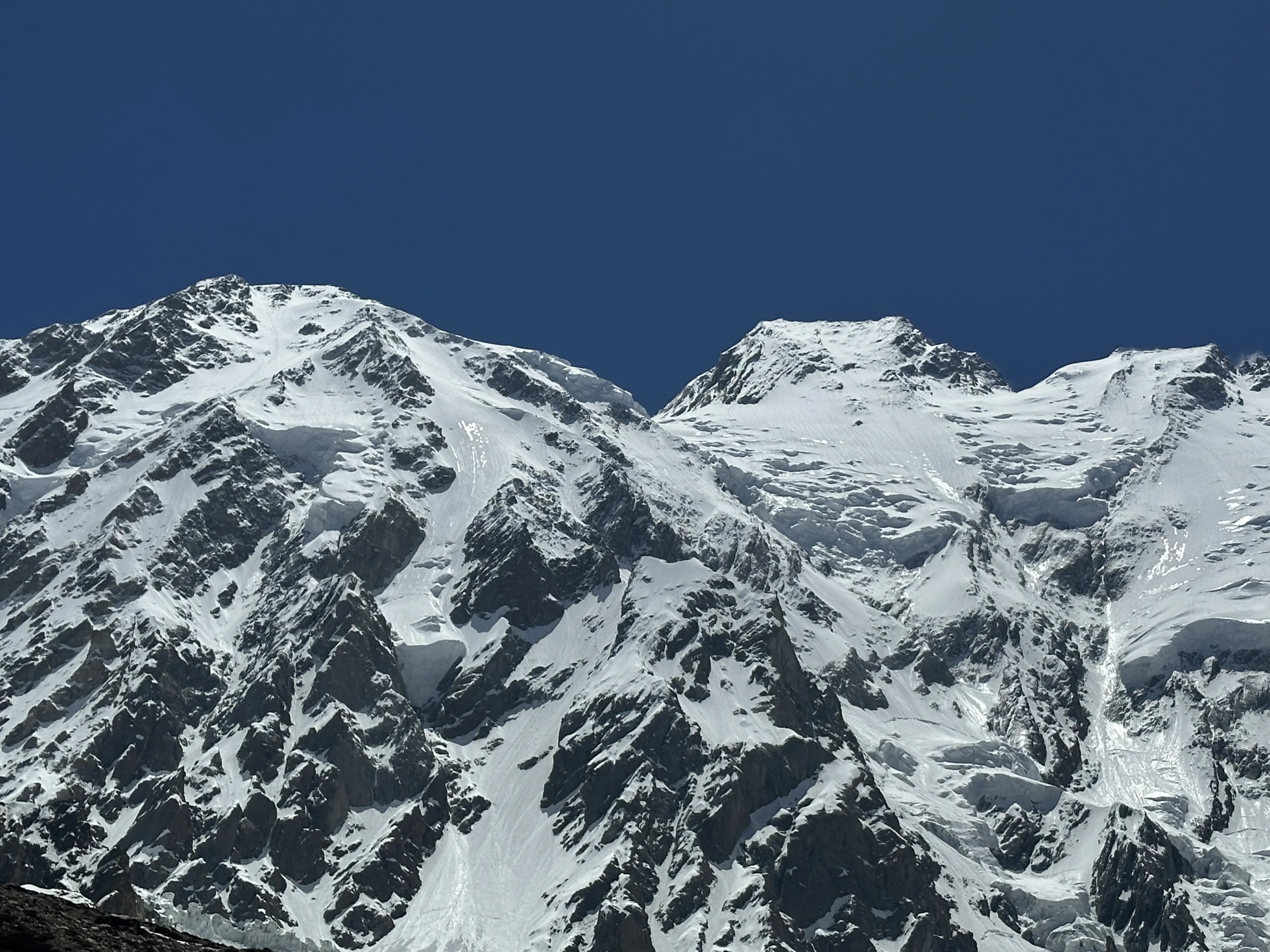
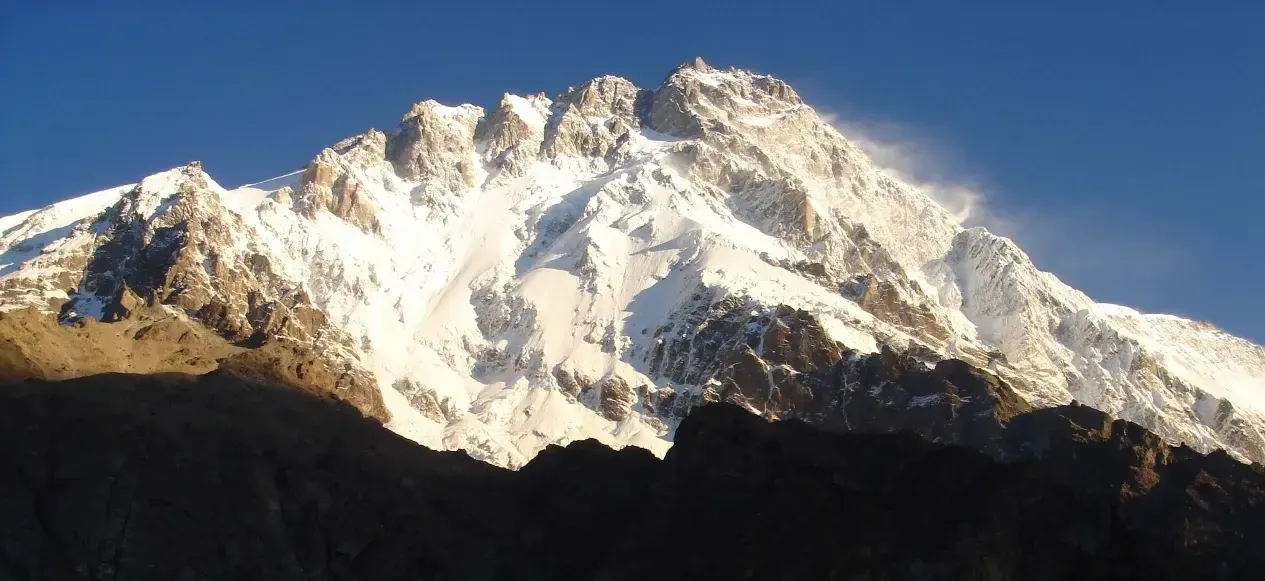
Nanga Parbat (8,125m) carries a weight of mountaineering history that distinguishes it from every other peak in the Himalaya. From the first serious attempts in the 1930s through the tragic expeditions that claimed dozens of lives before the first ascent, Nanga Parbat wrote some of the darkest and most compelling chapters in the story of high-altitude climbing, and that history is as present as the mountain itself for every expedition that follows.
The mountain's name is derived from the Sanskrit word 'Nanga Parbat', meaning 'Naked Mountain', a reference to the bare, exposed rock of its massive faces that shed snow in a way that reveals the underlying geology with unusual clarity. In the local Balti and Shina languages, the mountain is also known as Deo Mir, 'King of Mountains', a name that reflects its imposing dominance of the surrounding landscape.
The first successful ascent of Nanga Parbat came on July 3, 1953, when Austrian-German climber Hermann Buhl reached the summit in one of the most remarkable solo efforts in mountaineering history. Without supplemental oxygen, without a partner above Camp V, and after more than 40 hours of continuous climbing above high camp, Buhl reached the summit alone, descending in darkness, forced to stand upright on a narrow ledge through the night before making it back to camp the following morning. It remains one of the most audacious summit successes in the history of the sport, and it established Nanga Parbat's reputation as a mountain that demands everything from those who attempt it.
Today, Nanga Parbat has been summited far fewer times than many other eight-thousanders of comparable altitude, a reflection of its genuine technical difficulty, complex weather, and the physical demands of its isolated location. As of now, successful summits number in the hundreds, not thousands, and the mountain's fatality-to-summit ratio remains one of the highest among the world's fourteen eight-thousanders. For experienced mountaineers seeking an objective that offers both historical significance and genuine challenge, Nanga Parbat stands apart.
Nanga Parbat Expedition
Difficulty
10/10
Nanga Parbat (8,126 m) is considered an extremely difficult and dangerous 8,000-meter peak. Its standard Kinshofer Route involves steep rock and ice sections, long exposed slopes, avalanche and rockfall hazards, and highly variable weather. Above 7,000 m, extreme altitude, cold, exhaustion, and limited recovery make the summit push especially demanding. It is best suited for experienced high-altitude climbers with strong ice, rock, fixed-rope, and previous 7,000–8,000 m experience.
Activity
Mountaineering
The Nanga Parbat Expedition by Himalayan Mountaineering Expedition follows the Diamir Face via the historic Kinshofer Route; the most established and frequently climbed line on the mountain, used for the majority of successful modern ascents. First opened during the second ascent of Nanga Parbat in 1962, the route rises above the Diamir Glacier through steep ice slopes, crevassed glacier terrain, exposed rock sections, and high-altitude ridgelines before reaching the summit plateau. The expedition is organized around four high camps and a carefully planned acclimatization schedule to support a safe and progressive ascent.
Best Season
June-July
The best season for the Nanga Parbat Expedition is from July to August, with the most favorable summit windows typically occurring during the first half of July through early August. Located at the western edge of the Himalayan range, Nanga Parbat is influenced by both South Asian monsoon systems and northern weather patterns, creating highly variable mountain conditions and a relatively short climbing season compared to other 8,000-meter peaks.
Max Elevation
0 meters
The maximum altitude reached during the Nanga Parbat Expedition is 8,125 meters (26,657 ft), the summit of Nanga Parbat and one of the world’s fourteen 8,000-meter peaks. Above 8,000 meters, climbers enter the death zone, where oxygen levels are significantly reduced and prolonged exposure places increasing stress on the human body. The final summit section above Camp 4 at approximately 7,200 meters requires efficient movement, strong decision-making, and disciplined pacing at extreme altitude
Location
Pakistan
Nanga Parbat rises at the western edge of the Himalayan range in Gilgit-Baltistan, Pakistan, a region renowned for its dramatic landscapes and exceptional mountain geography, where the Himalaya, Karakoram, and Hindu Kush systems meet. Towering above the Indus River valley and surrounded by the Rupal, Diamir, and Rakhiot glaciers, Nanga Parbat offers one of the most spectacular expedition environments among the world’s 8,000-meter peaks.
Transportation
4x4 Jeep
The journey begins in Islamabad and continues through Pakistan’s northern mountain corridor via private jeep and dedicated overland expedition transport toward Chilas and the Nanga Parbat access region. The route passes through changing terrain, mountain settlements, and sections of the historic Karakoram Highway before transitioning into the expedition environment.
Duration
0 Days
The 50-day Nanga Parbat Expedition itinerary by Himalayan Mountaineering Expedition is built around the realities of the mountain, not around commercial convenience. Arriving in Islamabad, completing paperwork and permit processing, driving the Karakoram Highway to Chilas, and trekking to Base Camp requires more than four days before any technical climbing begins. Above Base Camp, the climbing and summit period spans 40 days, structured around multiple acclimatization rotations, load-carrying rotations to establish high camps, strategic waiting periods for weather windows, and the final summit push when conditions align.
Group Size
2-15
The Nanga Parbat Expedition is operated with carefully managed group sizes ranging from 2 to 15 climbers to maintain efficient logistics, personalized support, and high operational standards throughout the expedition. This team structure allows for better coordination during acclimatization rotations, camp movement, route management, and summit planning while preserving the flexibility required for a remote 8,000-meter expedition.
Accommodation
Hotel - Tent
Accommodation during the Nanga Parbat Expedition is arranged according to each stage of the journey to provide comfort, recovery, and operational efficiency throughout the expedition. Climbers stay in quality hotels in Islamabad, local lodges in Chilas, and fully equipped expedition tents during the trek, Base Camp, and climbing period.
Price
$0
The Nanga Parbat Expedition price starts from USD 30,000 per person based on the standard fully supported expedition package operated by Himalayan Mountaineering Expedition. The package includes core expedition logistics, permits, Base Camp services, climbing support, staffing, transportation arrangements, and high-altitude operational management required for a professional ascent of Nanga Parbat.
Food
Breakfast - Lunch - Dinner
Nutritious and carefully planned meals are provided throughout the Nanga Parbat Expedition to support acclimatization, recovery, and sustained performance at high altitude. Meals are prepared to maintain energy levels during long expedition days while accommodating operational requirements at altitude. In Islamabad and Chilas, breakfast is included, while additional meals are provided according to the selected expedition package.
Overview
Beat the Killer Mountain: Nanga Parbat will Wait to Summit with your mountain.
Nanga Parbat, commonly referred to as the Naked Mountain, is one of the most challenging in the world and it is 8,126 metres high. Being the ninth-highest peak on the Earth as well as the westernmost giant of the Himalayan mountains, it attracts the attention of climbers worldwide. Famous for its dramatic landscapes, extreme altitude, and demanding routes, Nanga Parbat offers a challenge that rivals even the most iconic climbs, including an Everest expedition.
Nanga Parbat is the ultimate adventure to mountaineers who want to test their mightiness, stamina, and will. The mountain has developed a very dreadful reputation known as the Killer Mountain due to its past harsh climbs and unstable weather patterns. But to those with experience in climbing and to expedition teams, this is precisely what makes this peak so legendary.
Mountain of uncommon Beauty and Test.
Nanga Parbat is a mountain not only characterised by its hardness, but also extremely beautiful in terms of nature. The mountain itself is an impressive sight in the Himalayas, as it emerges out of the valleys forming a dramatic mountain. Its enormous faces, glaciers and ridges make a landscape which attracts climbers and explorers.
The Rupal Face is one of the most outstanding elements of the mountain. This is the highest mountain wall in the world. It is more than 4,600 meters high straight to the summit and poses a huge vertical challenge which has attracted numerous historic climbing efforts. This face is hard to climb without sophisticated mountaineering, high level of physical fitness and planning.
The other routes like the Diamir Face and Rakhiot Route provide other climbing experiences. These are the routes that include crossing huge glaciers, climbing steep ridges and subjecting themselves to harsh weather. All the paths have their own difficulties and challenge their participants and offer them a spectacular view of the surrounding Himalayan land.
An epic of the History of Mountaineering.
Nanga Parbat is a tale of bravery, endurance and historic success. This mountain has been fought by numerous climbers during the decades, and their expeditions have turned into an epic in the mountaineering society. Expeditions in the early days were extremely difficult and the mountain soon had its name as one of the hardest to climb.
In spite of the dangers, Nanga Parbat keeps attracting climbers who have the dream of reaching one of the best summits in the world. Just like an Everest expedition, reaching the top of Nanga Parbat is not only about physical achievement--it is also about determination, teamwork, and respect for the power of nature.
The Ultimate Test of Elite Climbers.
Climbing Nanga Parbat does not take up some mountaineering experience. Due to the height, unpredictable storms, and extremely steep technical routes, this mountain is only the preserve of experienced climbers who are well prepared. Similar to preparing for an Everest expedition, climbers must train extensively, adapt to altitude, and carefully plan each stage of the climb.
Expeditions tend to be characterised by more than just a few camps, gradual acclimatisation, and trained guides that are familiar with the conditions of the mountain. Climbers are able to go safely to the mountain and have the experience of an amazing adventure with proper preparation and support.
Adventure with Adventure of Himalayan Mountaineering Expedition.
We also offer professional advice and services to the climbers who could also like to undertake this amazing challenge at Himalayan Mountaineering Expedition. Our team has a good team of experienced climbers who provide professional leadership, current climbing gear and well thought out expedition logistics to make the trip an easy and successful experience.
Whether you have already completed an Everest expedition or are looking to take on one of the world's most demanding climbs, Nanga Parbat provides a truly unforgettable mountaineering experience. Since the preparation of the base camp, until the last ascent, our team is in full support of the climbers.
Call of the Mountain.
Nanga Parbat is not a typical mountain, but it is a representation of adventure, bravery and the spirit of man. To people who desire challenging themselves and accomplishing something exceptional, this peak can provide them with an opportunity they have never had.
If you are ready to take on one of the greatest challenges in mountaineering and experience the thrill of a high-altitude adventure comparable to an Everest expedition, Nanga Parbat is waiting.
Explore our journey on Instagram, Facebook & TikTok for photos, videos, and stories
Would you like to ask us in email info@himalayanmountaineering.com.
Itinerary
Day 01:
Arrival in Islamabad and meet with our representative at the airport and transfer to Hotel. Welcome drink and short briefing about Nanga Parbat Expedition.
Overnight in Hotel - 540 meter
Day 02:
Paper work, gear preparation and more briefing about the trip at Ministry of Tourism.
Overnight in Hotel – 540 meters
Day 03:
Drive to Chilas on Karakoram highway for around 10 hours.
Overnight in Lodge – 1265 meter
Day 04:
Drive to halale Bride for 8 hours and small trek to Kachal.
Overnight in Tent – 3400 meters
Day 05:
Trek to Nanga Parbat Base Camp which will take around 6 hours to reach. We will set up our base camp here with our all crew.
Overnight in Tent - 3850 meters
Day 06-35:
Climbing and Summit Period of Mount Nanga Parbat. We will do different rotation in camp 1, 2 and 3, training, acclimatize, share past experience and learn technical skill we need to climb Nanga Parbat.
Overnight in Tent – 3850 meters
Day 36:
Trek to Kachal
Overnight in Tent - 3400 meters
Day 37:
Trek to Zangot and Drive back to Chilas
Overnight in Lodge – 1265 meters
Day 38:
Drive to Islamabad for around 9-10 hours.
Overnight in Hotel – 508 meters
Day 39:
Rest day in Islamabad
Overnight in Hotel – 508 meters
Day 40:
Final Departure from Islamabad
Route Map
Gear List
Here's a comprehensive gear and clothing list for a Nanga Parbat expedition. This list is tailored to ensure safety, comfort, and success in such an extreme environment:
Clothing
Base Layers
Insulation Layers
Outer Layers
Headwear
Gloves and Mittens
Footwear
Climbing Gear
Ice axe.
Camping Equipment
Technical Equipment
Personal Items
The Team
Our Everest team will be led by experienced Ningma Dorje Tamang who has a big history of climbing the big mountains with an experience of 15 years. Ningma Dorje Tamang is the Co-Founder and Director of Himalayan Mountaineering Expedition with over 15 years of mountaineering experience. He has guided and climbed major peaks including Everest, K2, Annapurna I, and Nanga Parbat. Known for his technical skills, leadership, and endurance, he is a highly respected high-altitude guide in Nepal. There will be other sherpa working under him for each members. There will also be a base camp who will take care of foods, accommodation and hygiene. There will also be team in Kathmandu who will work on weather update, helicopter arrangements and other necessary things.
Packages
Nanga Parbat - Classic Expedition
$30000
Our Mount Nanga Parbat Expedition Package Includes:
1. All airport and hotel transfer domestic and international both.
2. 6 nights' accommodation at 3-4 star hotel and 2 star hotel or Lodge with breakfast in Islamabad and Chilas respectively.
3. Private 4x4 from Islamabad to Halale Bridge and Back.
4. Meals (breakfast, lunch and dinner) with Tea & coffee and hot/cold filter water during the trek, base camp and all other places than Islamabad and Chilas.
5. Tented accommodation during climbing period on sharing basis. We will have a well settled base camp with our kitchen crew with varieties of foods, bakery and seasonal fruits. We will try to make as much comfort as possible or climber because that’s how climbers can climb in future. Different Cuisine from Nepal, Pakistan and Western food can be made for climbers.
6. Experienced One Nepali climbing Sherpa for One person from Base Camp to Base Camp during the climb who will help you for your summit and take care of you during the whole climbing.
7. Necessary porter to reach base camp and back.
8. Cook, helper, porters and their food & accommodation, salary, equipment’s & insurance for base camp and high camp services.
9. Camping Equipment’s, Tents, Kitchen Utensils and Mattresses with high foods.
10. 1 Duffle Bag, Radio Set, Satellite Phone, Map, Weather Report, Heater, Solar or Generator in Base Camp for charging mobile, laptop etc.
11. All necessary climbing permit for Nanga Parbat climbing Expedition.
12. Garbage management and disposal fees.
13. Government Liaison officer fees with his equipment, insurance, gears, accommodation and foods.
14. Training of using gears, climbing ladder, rope and other important knowledge and sharing experience of the expedition.
15. Oxygen Mask and Regulator with 4 liters of Oxygen Bottle is provided to every member and guide for high altitude.
16. First Aid Medical Kit box, frequent medical checkup and necessary emergency equipment’s.
17. Office Service charge and Certificates.
Nanga Parbat - Classic Expedition
$30000
Our Mount Nanga Parbat Expedition Package Includes:
1. All airport and hotel transfer domestic and international both.
2. 6 nights' accommodation at 3-4 star hotel and 2 star hotel or Lodge with breakfast in Islamabad and Chilas respectively.
3. Private 4x4 from Islamabad to Halale Bridge and Back.
4. Meals (breakfast, lunch and dinner) with Tea & coffee and hot/cold filter water during the trek, base camp and all other places than Islamabad and Chilas.
5. Tented accommodation during climbing period on sharing basis. We will have a well settled base camp with our kitchen crew with varieties of foods, bakery and seasonal fruits. We will try to make as much comfort as possible or climber because that’s how climbers can climb in future. Different Cuisine from Nepal, Pakistan and Western food can be made for climbers.
6. Experienced One Nepali climbing Sherpa for One person from Base Camp to Base Camp during the climb who will help you for your summit and take care of you during the whole climbing.
7. Necessary porter to reach base camp and back.
8. Cook, helper, porters and their food & accommodation, salary, equipment’s & insurance for base camp and high camp services.
9. Camping Equipment’s, Tents, Kitchen Utensils and Mattresses with high foods.
10. 1 Duffle Bag, Radio Set, Satellite Phone, Map, Weather Report, Heater, Solar or Generator in Base Camp for charging mobile, laptop etc.
11. All necessary climbing permit for Nanga Parbat climbing Expedition.
12. Garbage management and disposal fees.
13. Government Liaison officer fees with his equipment, insurance, gears, accommodation and foods.
14. Training of using gears, climbing ladder, rope and other important knowledge and sharing experience of the expedition.
15. Oxygen Mask and Regulator with 4 liters of Oxygen Bottle is provided to every member and guide for high altitude.
16. First Aid Medical Kit box, frequent medical checkup and necessary emergency equipment’s.
17. Office Service charge and Certificates.
Booking
Official Booking Confirmation is made only after 20% deposit of the total amount of the Expedition. Please contact us through email or inquiry form so that we can talk and confirm our booking.
Gallery
Trip Inquiry
Search another peak or departure, or send your questions, preferred dates, group size, and expedition requirements — our team will get back to you.
Not sure which peak? Browse all expeditions or send us a message and we'll recommend one.