Loading
Preparing your Himalayan journey
Baruntse Expedition
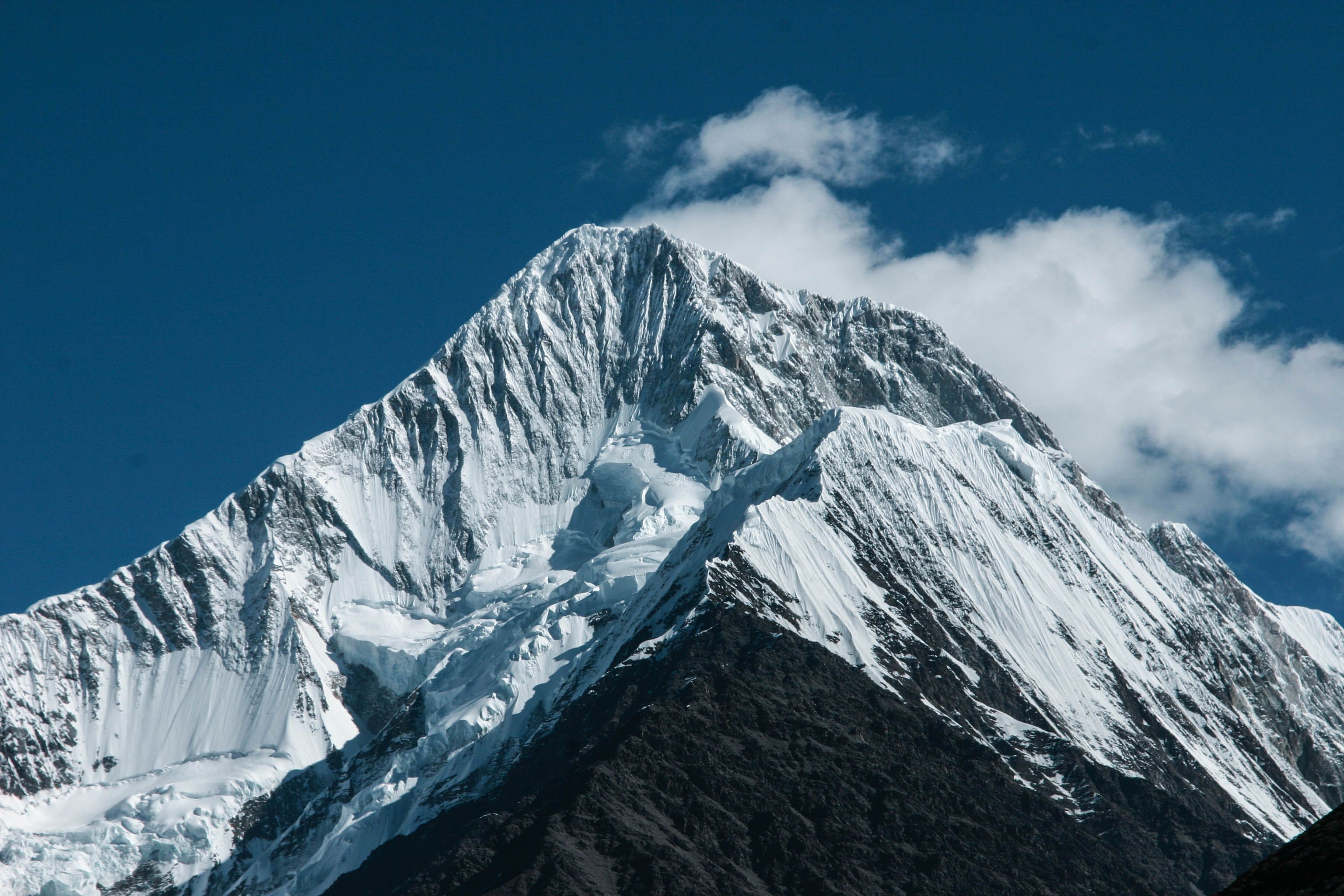
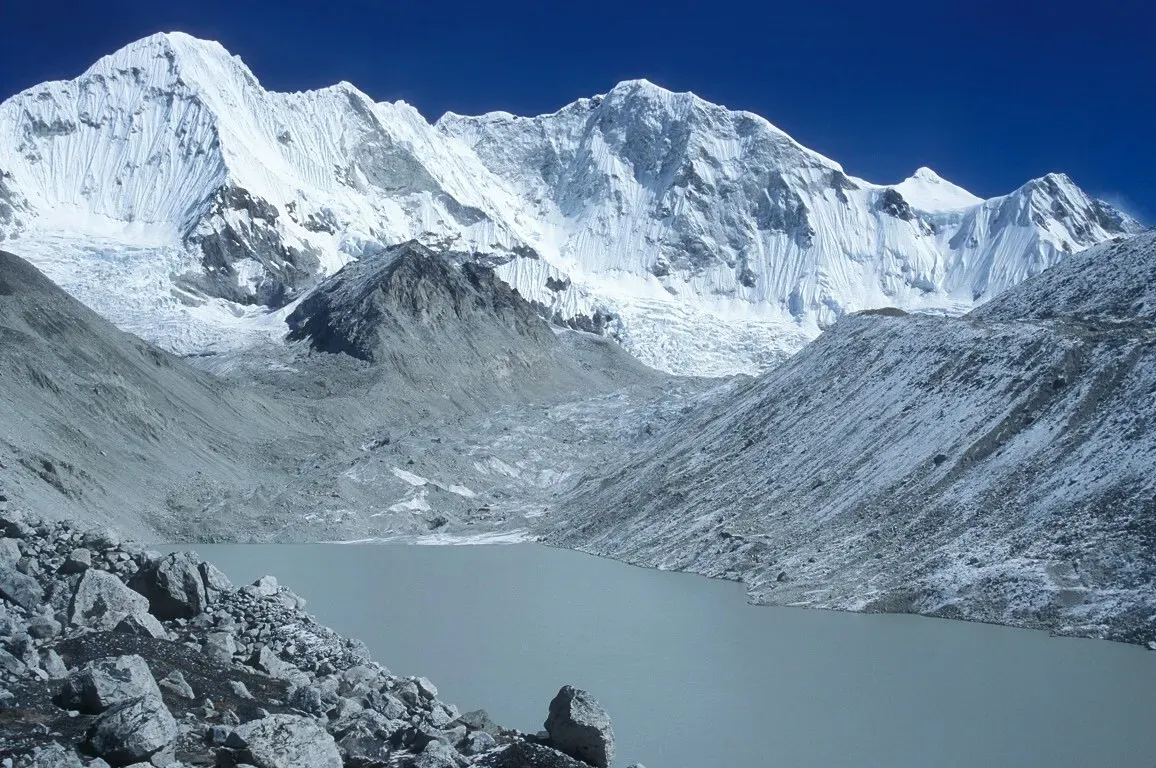
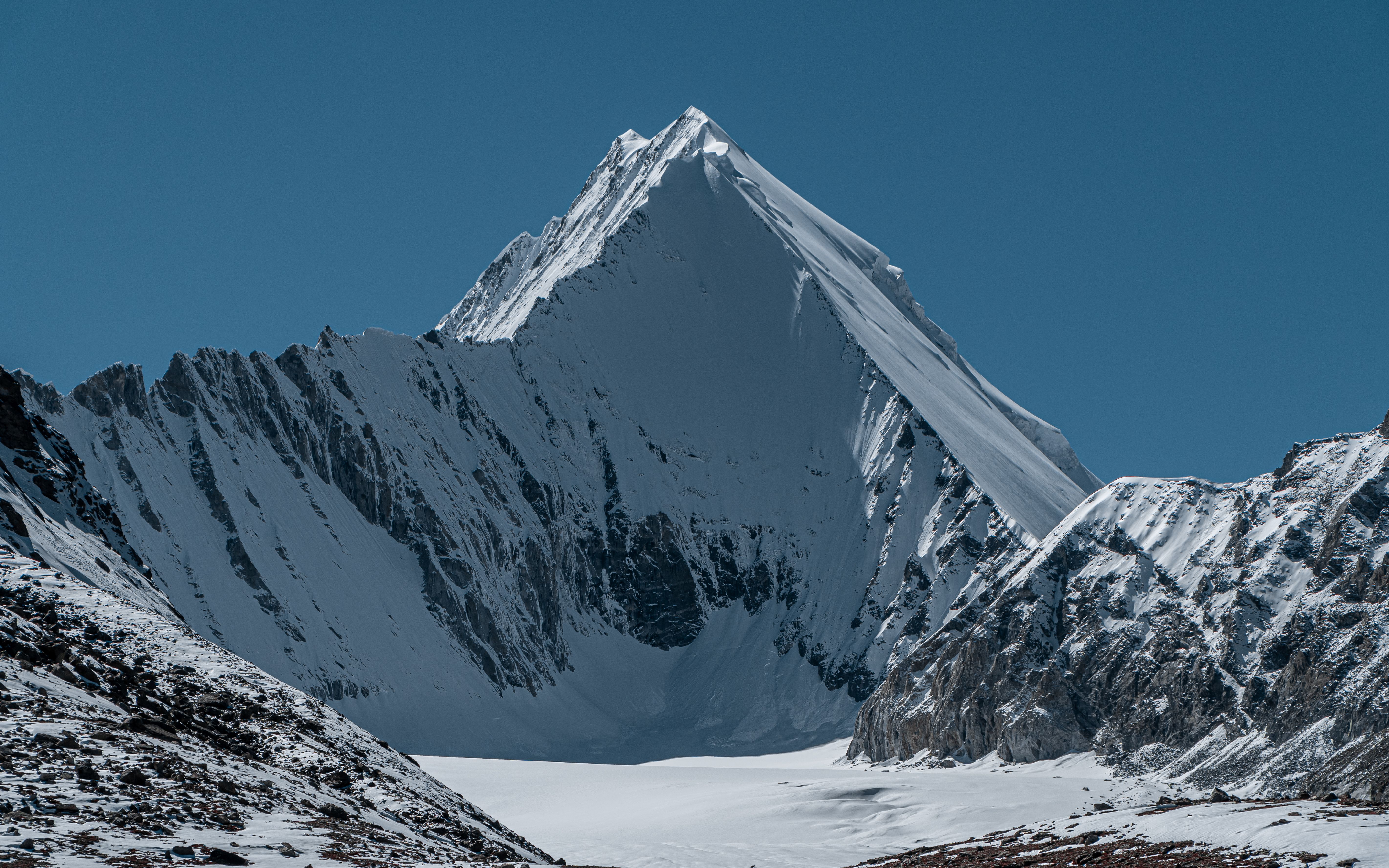
Baruntse Expedition is a 35-day climbing adventure to the summit of Baruntse (7,129m), one of the beautiful and challenging 7,000m peaks in Nepal. Located between Mount Everest and Mount Makalu, the expedition takes you through the remote Hinku and Hongu valleys before reaching Baruntse Base Camp.
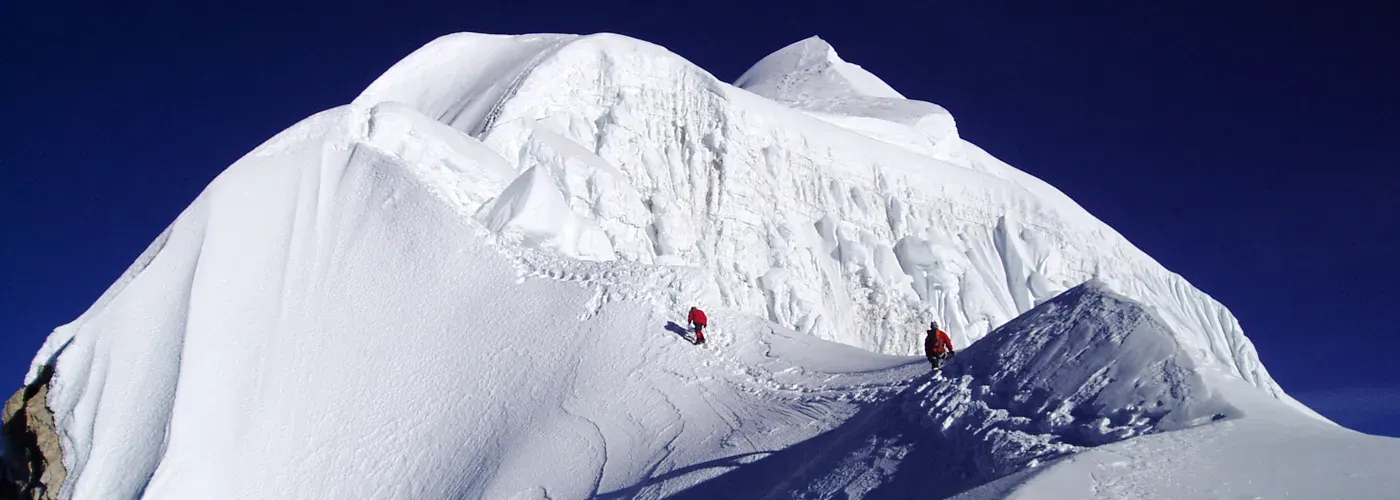
The climb follows the Southeast Ridge via the West Col, involving glacier travel, fixed-rope climbing, steep snow and ice sections, and an exposed summit ridge. With proper acclimatization, technical training, experienced Sherpa support, and a well-managed climbing strategy, Baruntse is an excellent choice for climbers looking for their first serious 7,000m expedition or preparing for an 8,000m peak.
Baruntse Expedition
Difficulty
7/10
Baruntse Expedition requires strong physical fitness, high-altitude experience, and basic technical climbing skills. The route involves glacier travel, fixed ropes, steep snow and ice, and demanding conditions above 7,000m.
Activity
Mountaineering
Baruntse Expedition is a challenging 7,129m climb through Nepal’s remote Hinku and Hongu valleys. It combines high-altitude trekking, glacier travel, and technical snow and ice climbing.
Best Season
spring - Autumn
Spring (March–May) is the best season for the Baruntse Expedition, offering generally stable weather and favorable climbing conditions. Autumn (late September–November) is also suitable for experienced climbers.
Max Elevation
7,162m/23,392 ft
Our Baruntse Expedition reaches the summit of Baruntse at 7,129m, offering a challenging high-altitude climbing experience and spectacular views of the surrounding Himalayan peaks.
Location
Nepal
Mahakulung, Khumbu Region, Eastern Nepal 27.8625° N, 86.9297° E Baruntse lies between Everest and Makalu, at the meeting point of the remote Hinku, Hongu, and Barun valleys. The approach passes through pristine alpine landscapes, glaciers, and some of the less-traveled terrain of the eastern Himalaya.
Transportation
Domestic Flight & Private Jeep
The expedition begins with a private jeep drive from Kathmandu to Ramechhap, followed by a domestic flight to Lukla. The approach to Baruntse Base Camp continues on foot through the remote Hinku and Hongu valleys, with a return flight from Lukla to Kathmandu.
Duration
0 Days
Our 35-day Baruntse Expedition includes the approach trek, acclimatization, technical climbing, summit attempt, and return through the Amphu Labtsa Pass.
Group Size
1 - 15
Our Baruntse Expedition welcomes individual climbers, private groups, and small teams. This flexible group size allows us to maintain close coordination, personalized support, and a comfortable climbing experience throughout the expedition.
Accommodation
Hotel, Teahouse & Expedition Tents
Accommodation includes comfortable hotel stays in Kathmandu, teahouse lodges during the trekking approach, and fully equipped expedition tents at Baruntse Base Camp and higher camps. The camping setup provides essential facilities for rest and recovery throughout the climbing period.
Price
USD 0
Our Baruntse Expedition starts at USD 9,000 per person, covering the essential trekking, climbing, accommodation, permits, logistics, and expedition support. Group discounts and customized arrangements are available on request.
Food
B - L - D
Nutritious meals are provided throughout the trekking and climbing period, with a mix of Nepali, Tibetan, and continental dishes. Tea, coffee, and filtered drinking water are also included to support hydration and energy at high altitude.
Overview
Baruntse (7,129m) is a striking, symmetrical, four-summited peak positioned almost exactly between Everest and Makalu, bounded by the Hunku Glacier to the south, the Barun Glacier to the east, and the Imja Glacier to the northwest. Its central location among some of the world's highest mountains means the summit panorama takes in Everest, Lhotse, Makalu, Cho Oyu, Kangchenjunga, Ama Dablam, and Nuptse in a single sweeping view, a reward few other 7,000m peaks can offer.
Baruntse was first climbed on 30 May 1954 by Colin Todd and Geoff Harrow of a New Zealand expedition led by Sir Edmund Hillary, following the southeast ridge, a route that remains the standard line climbed today. Since that first ascent, Baruntse has earned a reputation as one of the best-organized and most consistently successful 7,000m peaks in Nepal, a mountain that runs almost entirely over snow and ice with the technical difficulty concentrated in two well-defined sections: the steep climb to the West Col and a distinctive ice cliff near 7,000 metres.
For climbers who have completed a 6,000m peak such as Mera Peak, Island Peak, or Lobuche East and want a genuine, well-rounded introduction to 7,000m mountaineering, Baruntse remains one of the most respected preparation climbs in the Himalaya, incorporating many of the components of an 8,000m expedition, fixed-rope climbing, glacier travel, high-camp logistics, and extended altitude exposure, within a shorter and more predictable timeframe.
The approach to Baruntse passes through the Hinku and Hongu valleys, two of the most remote and least-trodden trekking corridors in the Everest region. Far removed from the well-worn Everest Base Camp trail, this route threads through rhododendron and pine forest, high alpine pasture, and windswept moraine, with scattered high-altitude settlements used seasonally by Sherpa herders.
The valley's terrain shifts dramatically with elevation, from forested lower reaches around Pangom and Khola Kharka to the stark, glaciated high country near Khare and Seto Pokhari, where the presence of Mera Peak, Chamlang, and Baruntse itself dominate the skyline. This genuine wilderness experience, largely free of crowds, is a defining part of what makes the Baruntse Expedition as memorable for its trekking as for its summit.
Getting to Baruntse Base Camp is a proper expedition in its own right. The journey begins with a private jeep drive from Kathmandu to Ramechhap, followed by a short 20-minute flight to Lukla, from where the trek enters the Hinku Valley via Paiya and Pangom, deliberately bypassing the busier Zatrwa La route.
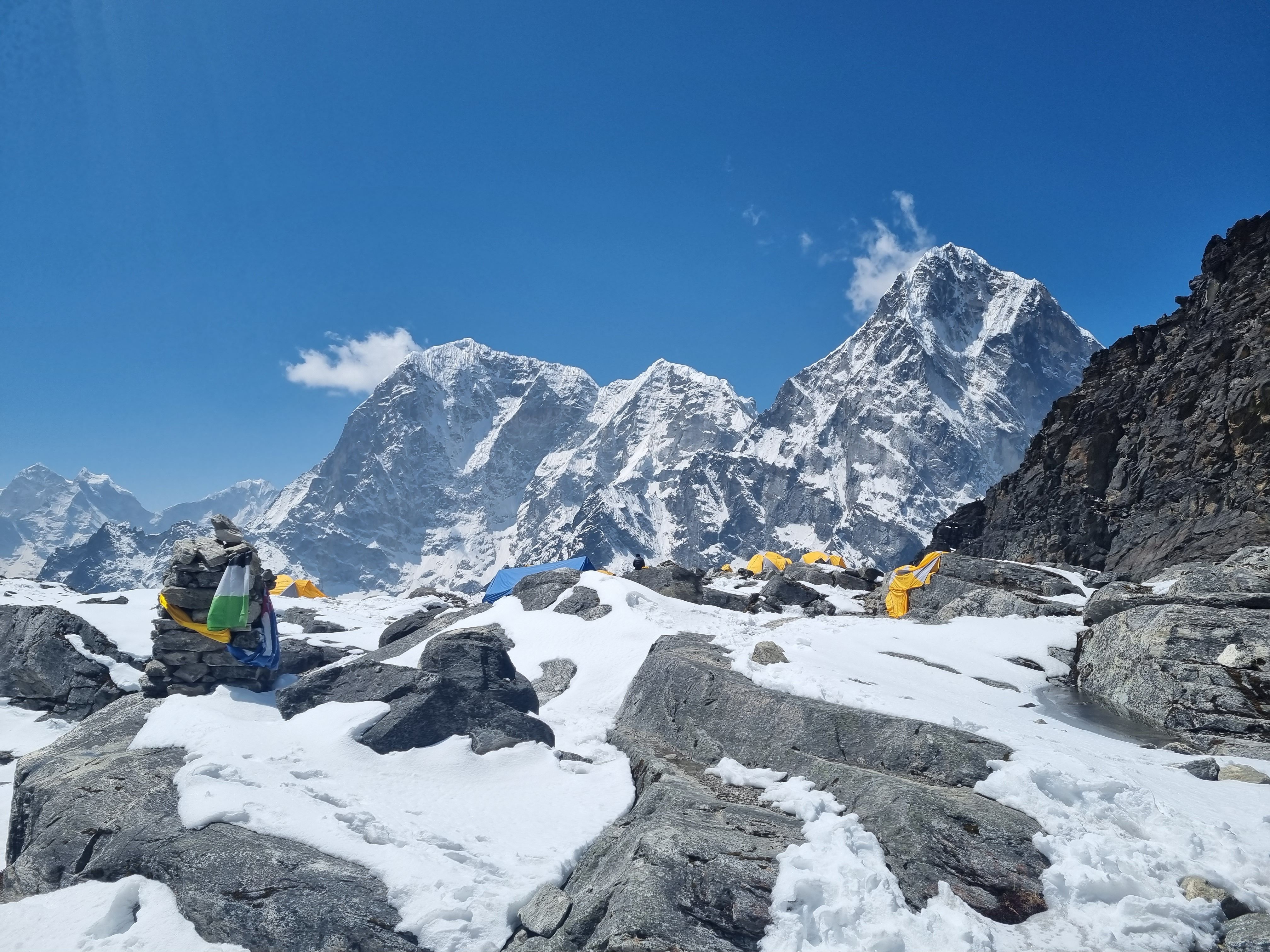
From Pangom, the trail continues through Khola Kharka, Kothe, and Thaknak before reaching the high-altitude staging post of Khare, where a dedicated acclimatization day is built into the schedule. From Khare, the route crosses increasingly remote terrain via Kongma Dingma and the glacial lake country around Seto Pokhari before reaching Baruntse Base Camp at approximately 5,400 metres, where the expedition's full climbing operation is established.
The Baruntse Expedition follows the southeast ridge, the standard route first climbed in 1954 and now used by the vast majority of guided expeditions on this mountain. From Base Camp, the route gains the West Col, a genuinely demanding fixed-rope pitch of steep snow, ice, and rock at roughly 45 to 50 degrees, before reaching a broad glacial plateau where Camp 1 is established at approximately 6,100 to 6,150 metres.
From Camp 1, a long, low-angled glacier ascent on fixed rope leads to Camp 2 at approximately 6,400 metres, positioned at the base of the Baruntse ridge proper, near the mountain's distinctive ice cliff. Some expeditions establish an optional higher camp near 6,800 metres if conditions warrant it. From the top camp, the summit push crosses further steep ice and snow sections before narrowing onto the exposed summit ridge that leads to 7,129 metres.
Summit day typically runs 7 to 12 hours of continuous climbing and descent, moving through a mix of steep ice, short rock steps, and a sharp, sometimes corniced summit ridge. As with any high-altitude summit attempt, careful pacing, weather judgment, and turnaround discipline matter as much as fitness in the final hours.
On arrival at Base Camp, Himalayan Mountaineering Expedition runs a full technical training program before any climber moves onto the mountain. This includes:
An Ideal Climb to Greater Himalayan Ambitions.
Baruntse is far beyond a mountain climb. It is an all inclusive Himalayan journey that has adventure, education, and personal success in an unbelievable environment. For climbers looking to build experience, test themselves at altitude, and prepare for future goals like an Everest expedition, Baruntse is a perfect choice.
Baruntse offers an experience that is both breathtaking and memorable with its distant approach, breathtaking summit ascent, magnificent mountain sightseeing, and professional assistance of the expedition crew. It is a mountain that demands of you, empowers you, and lingers even when the journey is completed.
Explore our journey on Instagram, Facebook & TikTok for photos, videos, and stories
Would you like to ask us in email info@himalayanmountaineering.com.
Itinerary
Day 01: Arrival in Kathmandu (1,400m)
Our representative meets you at Tribhuvan International Airport and transfers you to the hotel.
A welcome briefing introduces the Baruntse Expedition structure, team introductions, and the schedule ahead.
Overnight: Hotel — 1,400m
Day 02: Expedition Preparation & Briefing (1,400m)
Permit paperwork, a full gear inspection, and a detailed expedition briefing with the climbing team.
Overnight: Hotel — 1,400m
Day 03: Drive to Ramechhap & Fly to Lukla, Trek to Paiya (2,730m)
A roughly 4-hour private drive to Ramechhap, followed by a short 20-minute flight to Lukla and a trek onward to Paiya.
Overnight: Lodge — 2,730m
Day 04: Trek to Pangom (2,846m)
A trekking day deliberately routed away from the busier Zatrwa La trail, entering the quieter approach to the Hinku Valley.
Overnight: Lodge — 2,846m
Day 05: Trek to Ningsow (Nagindingma) (2,650m)
Continue along the remote Hinku Valley trail through forested terrain toward Ningsow.
Overnight: Lodge — 2,650m
Day 06: Trek to Khola Kharka (3,930m)
A steady climb further into the Hinku Valley, gaining significant altitude as the trail moves above the treeline.
Overnight: Lodge — 3,930m
Day 07: Trek to Kothe (3,691m)
A shorter trekking day following the Hinku Drangka river valley to the small settlement of Kothe.
Overnight: Lodge — 3,691m
Day 08: Trek to Thaknak (4,358m)
Continue up the valley toward Thaknak, with views of Mera Peak and the surrounding ridgelines opening up.
Overnight: Lodge — 4,358m
Day 09–10: Trek to Khare & Acclimatization Day (5,045m)
A short trekking day of roughly 3 hours to Khare, the last settlement before the high mountains, followed by a full acclimatization day.
Overnight: Lodge — 5,045m
Day 11: Trek to Kongma Dingma (5,200m)
Trek across increasingly remote, high-altitude terrain toward Kongma Dingma.
Overnight: Lodge — 5,200m
Day 12: Trek to Seto Pokhari (5,053m)
Continue through glacial lake country toward Seto Pokhari, with Baruntse and Chamlang dominating the skyline.
Overnight: Lodge — 5,053m
Day 13: Trek to Baruntse Base Camp (5,400m)
A trek across rocky moraine to Baruntse Base Camp, where our full expedition crew is established and the mountain comes into clear view.
Overnight: Tent — 5,400m
Day 14–28: Climbing Period — Summit Baruntse (5,400m – 7,129m)
This 15-day window forms the heart of the expedition: technical training on the glacier; structured acclimatization rotations via the West Col to Camp 1 (~6,100–6,150m) and Camp 2 (~6,400m); load-carrying to stock the high camps; continuous weather monitoring; and the final summit push when conditions and team readiness align.
The route crosses a steep 45–50 degree ice and snow section to the West Col, a further steep pitch near the summit ridge, and the technical ice cliff near 7,000 metres, with sweeping views of Cho Oyu, Everest, Lhotse, Kangchenjunga, Makalu, Mera, and Nuptse along the way.
Overnight: Tent — 5,400m to 7,129m
Day 29: Trek to Amphu Labtsa Base Camp (~5,400m)
Begin the return journey with a trek toward the base of the Amphu Labtsa Pass, one of the most spectacular high passes in the Everest region.
Overnight: Tent — ~5,400m
Day 30: Cross Amphu Labtsa Pass to Chhukung (5,845m Pass / 4,730m)
An early start to cross the technical, glaciated Amphu Labtsa Pass on fixed ropes, descending into the Khumbu valley to reach Chhukung.
Overnight: Lodge — 4,730m
Day 31: Trek to Namche Bazaar (3,440m)
Descend through Pangboche and Tengboche, rejoining the classic Everest trail down to Namche Bazaar.
Overnight: Lodge — 3,440m
Day 32: Trek to Lukla (2,860m)
Continue the descent down the Khumbu valley to Lukla, closing the loop on the expedition's climbing and trekking phase.
Overnight: Lodge — 2,860m
Day 33: Fly to Kathmandu (1,400m)
A scenic morning flight from Lukla back to Kathmandu, with time to rest and relax.
Overnight: Hotel — 1,400m
Day 34: Rest Day in Kathmandu & Farewell Dinner (1,400m)
A full free day for recovery, shopping, and sightseeing, followed by a farewell dinner with the Himalayan Mountaineering Expedition team to celebrate the climb.
Overnight: Hotel — 1,400m
Day 35: Final Departure (—)
Transfer to Tribhuvan International Airport for onward international travel. This concludes the Baruntse Expedition.
This itinerary follows a gradual, deliberately structured progression to support acclimatization, technical preparation, and safe mountain movement throughout. All timings are subject to weather, trail conditions, and team performance. Every stage is planned around the safest, most effective path to a successful ascent of Baruntse.
Gear List
Preparing for a 7000-meter mountain requires careful planning and the right gear to ensure safety and comfort in extreme conditions. Here’s a straightforward checklist to guide you:
Pro Tip: Test all your gear beforehand to ensure it fits and works as expected. Comfort and reliability can make or break your climb at high altitudes.
For personalized advice or to book your next expedition, get in touch at info@himalayanmountaineering.com or visit www.himalayanmountaineering.com.
The Team
Our Baruntse Expedition will be led by experienced mountaineer Ningma Dorje Tamang, Co-Founder and Director of Himalayan Mountaineering Expedition, with over 15 years of high-altitude climbing experience. He has extensive experience on major Himalayan peaks, including Everest, K2, Annapurna I, and Nanga Parbat. The expedition will be supported by experienced Sherpa climbers, with dedicated assistance for each member throughout the climbing period. Our Base Camp team will manage meals, accommodation, hygiene, and daily camp operations, while our Kathmandu team will coordinate weather updates, logistics, helicopter arrangements, and other essential expedition support.
Packages
Budget
$9,000
Budget
$9,000
Booking
Official Booking Confirmation is made only after 20% deposit of the total amount of the Expedition. Please contact us through email or inquiry form so that we can talk and confirm our booking.
FAQ
Baruntse offers a balanced combination of altitude, technical climbing, glacier travel, and high-camp experience. Its established Southeast Ridge makes it a strong objective for climbers progressing from 6,000m peaks toward more demanding Himalayan expeditions.
Yes. We can arrange private departures and adjust the itinerary according to the group's experience, schedule, and climbing objectives. Combined programs, including Mera Peak and Baruntse, can also be arranged on request.
Climbers should be physically fit and comfortable with crampons, ice axes, fixed ropes, and glacier terrain. Previous experience on peaks such as Mera Peak, Island Peak, or Lobuche East is strongly recommended.
Our 35-day itinerary allows dedicated time for acclimatization, technical preparation, camp rotations, and weather management. The climbing period is flexible enough to allow the team to wait for a suitable summit window.
The expedition includes experienced climbing Sherpas, a dedicated Base Camp team, high-camp logistics, weather monitoring, communication, and Kathmandu-based operational support. This allows climbers to focus primarily on preparation and climbing.
Gallery
Trip Inquiry
Search another peak or departure, or send your questions, preferred dates, group size, and expedition requirements — our team will get back to you.
Not sure which peak? Browse all expeditions or send us a message and we'll recommend one.