Everest Expedition 2027 : Complete Guide to Climbing Mount Everest
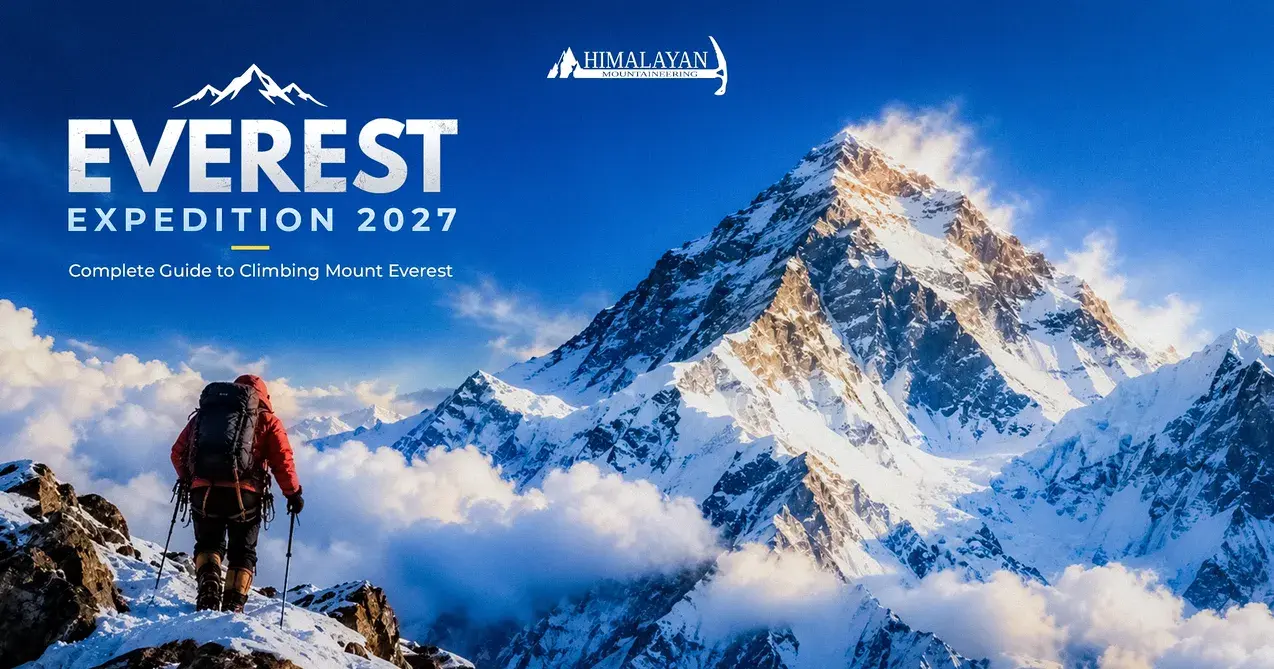
The highest mountain in the world is Mount Everest, with a height of 8,848.86 meters (29,031.69 feet) from sea level. Twinned with the Himalayas, Everest draws mountaineers from all corners of the Earth trying to reach the famous top of Everest. An Everest expedition is not a regular trek, but is a challenging high-altitude mountaineering trip that demands not only good body condition but also technical skills, acclimatization, and careful planning.
For climbers attempting Everest climbing, it is imperative to understand the route, training, equipment for climbing, camps, weather, and expedition process. With appropriate preparations and professional help, climbers will be more confident while approaching the difficult mountain.
What is the Everest Expedition?
An Everest Expedition refers to a complete mountaineering itinerary that moves professional climbers from Kathmandu to Everest Base Camp and through different camps and up to the summit.
The operations usually take months because it takes a lot of time for climbers to acclimatize, train, carry out climbing rotations, and might involve bad weather. It is currently estimated that Himalayan Mountaineering's Everest expedition will take 56 days, which may vary even considerably depending on the climbing circumstances in the expedition.
Contrary to Base Camp trekking, the Everest climb includes the technical climbing part out of Base Camp, where climbers can use fixed ropes, crampons, ice axes, harness systems, oxygen systems, and other special equipment.
What Makes Mount Everest So Tough to Climb?
The altitude of Everest presents the first challenge of climbing this mountain. At extreme altitude, the amount of available air is substantially less than at sea level. Climbers also have to deal with cold temperatures, powerful winds, snow, ice, steep terrain, as well as unpredictable weather conditions.
The most difficult phase of the climb is going to happen at very high altitude, and climbers must carry all necessary equipment.
The challenges are as follows:
- Extreme altitude
- Low oxygen levels
- Strong winds and cold temperatures
- Not easy walking on steep terrain covered with ice and snow
- Long expedition.
- Altitude sickness
- Weather changes.
- Fatigue both physical and mental.
- Technical sections of climbing.
Due to the aforementioned conditions, Mount Everest needs much more preparation than another Himalayan trek.
Route to climb Mount Everest Expedition
When climbing Mount Everest from Nepal, the best known route is the South Col Route, which goes originally from Kathmandu and moves through Khumbu before the site of the Everest Base Camp.
In its main phases, the South Col Route can be described as follows:
Kathmandu → Lukla → Phakding → Namche Bazaar → Tengboche → Dingboche → Lobuche → Everest Base Camp → Camp I → Camp II → Camp III → Camp IV/South Col → Everest Peak.
Along the route, climbers are able to reach their peak at a gradual pace and have enough time to acclimatize on the way to their destination.
The current program aimed at climbing Mount Everest includes climbing Lobuche Peak as part of the acclimatization process before reaching the Everest Base Camp.
Everest Base Camp
Everest Base Camp is situated at a height of around 5,364 meters and serves as the primary center for the mountaineering expedition.
Once expeditions have reached Base Camp, climbers have time to relax, acclimatize, check their gear and practice climbing. The team of the expedition is constantly observing the weather and getting ready for the marches to higher camps.
Base Camp is indeed much more than a mere place to stay. The camp becomes the headquarters for the expedition providing food, accommodation, communication aid, help with the medical assistance needed, weather forecast, and climbing logistics.
Higher Camps Scale on Everest
Once climbers have acclimatized at Base Camp, they will continue on to the higher camps.
Camp I
Located above the Khumbu Icefall, Camp I poses a challenge as climbers have to traverse through ice-covered glaciers to get there. Ropes, ladders, and crampons are essential since this section is characterized by steep, slippery surfaces.
Camp II
Also called Advanced Base Camp, Camp II is located in the Western Cwm, where climbers usually wait during acclimatization rotations.
Camp III
Camp III lies along the Lhotse face, where climbers face steeper terrains and difficult climbing. In this section, the use of fixed ropes makes it safe to navigate through rocky surfaces.
Camp IV/South Col
At approximately 7,950 meters, Camp IV is the last camp before the summit. This camp is also known as the South Col.
Here, climbers will start making final preparations for the summit. The attempt to reach the summit usually takes place at night in order for climbers to arrive at the summit when conditions are the most favorable and thus be able to descend safely.
Climbing Training for Everest
The appropriate training for Everest climbing has to start well in advance of the expedition. Climbers require many things, including cardiovascular endurance, strength, abilities to hike, and technical abilities for the climbing process.
Great training opportunities will include:
- Long-distance hiking
- Walking uphill
- Climbing stairs
- Cycling and running
- Strength training
- Core workouts
- Hiking with a loaded backpack
- Training with the crampons
- Training with ice axe
- Fixed-rope climbing
- Practicing glacier crossing
The increasing intensity of the training will allow the climbers to improve the physical skills without overstressing.
Past Expertise for Everest
Generally speaking, Everest is not a mountain where novice climbers may showcase their skills. Climbers need to possess experience of high attitudes and need to feel at ease while using rock-climbing gear.
Climbing appropriate peaks of 6000 meters to 7000 meters is critical for building valuable skills required for Everest climbing expeditions. Mountains like Lobuche and other places in the Himalayas provide climbers their CRM experiences in the environment of snow, ice, high-altitude, and long walks.
Himalayan climbing also provides climbers with the benefits of climbing mountains of heights between 6000 and 7000 meters.
Acclimatization to the conditions on Everest
Acclimatization is one of the vital stages of preparation for Everest.
The organism needs time to adapt itself as people gain altitude. A good expedition means days of rest or rotations rather than movements upward throughout the trip.
During acclimatization, climbers may reach a higher camp, spend some time there, and return to a camp of lower elevation.
Best Timing for Everest Climbing
The best time of the year to climb Mount Everest is spring, especially from the end of April to the beginning of June. Weather plays an important role when it comes to choosing the right time for a good Everest summit attempt.
Even during the prime season, the conditions on the mountain can change quickly. Bad weather conditions in terms of strong winds, a lot of snow, poor visibility, etc. hinder climbers’ summit attempts.
For this reason, the trekking plan should have a flexible nature and include some backup time.
Essential Gear for Everest Climb
The right equipment is vital for climbing Mount Everest. Equipment has to keep climbers safe from extremely low temperatures and assist climbers in performing technical sections.
Essential equipment includes:
- Mountaineering boots
- Crampons
- Ice axe
- Climbing harness
- Hiking helmet
- Fixed rope gear
- Down suit
- Down jacket
- Base layers
- Water-resistant outer layers
- High-altitude gloves
- Sunglasses and goggles
- Sleeping bag
- Headlamp
- Backpack
- Climbing gear
- Personal medical set
Supplemental oxygen is often used when climbing Mount Everest. Himalayan Mountaineering packages include instances when supplemental oxygen, masks, and regulators are provided.
Cost of Everest Expedition
The cost of Everest expedition varies depending on the type and level of services provided by the required logistic support and climbing equipment required by climbers for the ascent of Everest. The costs can widely vary depending on the number and type of packages to choose from.
According to Himalayan Mountaineering, the Everest expedition packages start from $42,000 with options for better service included in the package. The exact Everest expedition costs should always be confirmed with the expedition company operating the trekking tour to avoid any misunderstandings regarding available services, government fees, and logistic costs.
Help of Sherpas in Expedition
Sherpas are the climbers who participated in numerous expeditions to Everest mountains and give support in route-setting, arranging the camps, carrying the loads, and fixing the ropes. The professional expedition team can also take care of weather forecasts, communication, food supply, living arrangements, medical support, and emergency planning.
Himalayan Mountaineering provides its clients with well-trained high-altitude group leaders and Sherpas for the successful ascent.
The Importance of Safety in an Everest Expedition
Safety is paramount when it comes to the practice of high-altitude climbing.
Climbers have to follow the guidelines given by their expedition leaders and should never ignore signs of altitude sickness or extreme exhaustion.
In order to stay safe while climbing, it is important to adhere to the following rules:
- Respect acclimatization
- Drink enough water
- Eat regularly
- Pay attention to one’s physical state
- Use the climbing equipment properly
- Pay close attention to fixed ropes
- Listen to the current information about weather forecasts
- Avoid risks
- Communicate with the team
And make sure that one is ready to turn back in case of danger.
Though reaching the summit is important, being able to get back safely is far more important.
The advantages of working with Himalayan Mountaineering on an Everest
Himalayan Mountaineering is an expert in mountaineering, trekking, and expedition services. The Everest program is well-structured and comprises acclimatization, climbing training, Base Camp support, expert Sherpas, weather report, and expedition logistics.
The current Everest program includes Lobuche Peak for acclimatization, effective training at Base Camp, circuit climbs to higher camps, and full support during the expedition.
Although climbing Everest can be a huge adventure on your own, having a trained team makes the trip much easier and keeps climbers focused on preparation, acclimatization, and safe climbing.
Final Thoughts
An expedition to Mount Everest presents a huge challenge in mountaineering. It is not enough simply to have physical strength to attain the height of 8,848.86 meters; additionally, one needs adequate training and previous experience of climbing at high elevations, technical skills, proper equipment, careful acclimatization, and strong mental training.
It is important to understand that the trek to Everest Base Camp is only the beginning of the expedition, and to reach the final summit, one should have sufficient patience and develop effective strategies.
Frequently Asked Questions
What is the height of Mount Everest?
Mount Everest is 8,848.86 meters tall which makes it the tallest mountain in the world.
How long does the Everest Expedition take?
The whole expedition takes weeks since climbers should trek, acclimatize, train, climb according to their schedule, wait for bad weather and try to reach the summit. Currently, Himalayan Mountaineering is planning to organize its Everest expedition in 56 days.
What is the best time for climbing Everest?
Spring is considered the main climbing season starting in late April and finishing in early June. However, the weather can change, thus it becomes difficult to choose the right time to reach the peak.
Do I need prior experience in climbing to climb Everest?
Yes, you need to have prior experience in high altitude climbing and climbing in expedition conditions which is extremely important for climbing Everest.
What is the route of the Everest Expedition in Nepal?
The standard route of Everest Expedition begins in Khumbu valley and goes along the same route that includes going through the Khumbu Icefall, Camp I, Camp II, Camp III, Camp IV and at the end reaching the summit of Mount Everest.